

How to Set Up a New Business Without Missing the Basics
To set up a new business, first check that people will pay for your idea. Then write a simple plan with your costs, prices, and cash needs. Choose a legal structure, check your business name, and complete the registrations, tax IDs, licenses, and permits your location and industry require. Before you launch, separate your business finances, arrange the right insurance, and set up a way to track every sale and expense.
The goal is not to get every decision perfect on day one. It is to avoid costly gaps and build records you can trust. We're Caroline and Joe, and we'll walk you through each step.
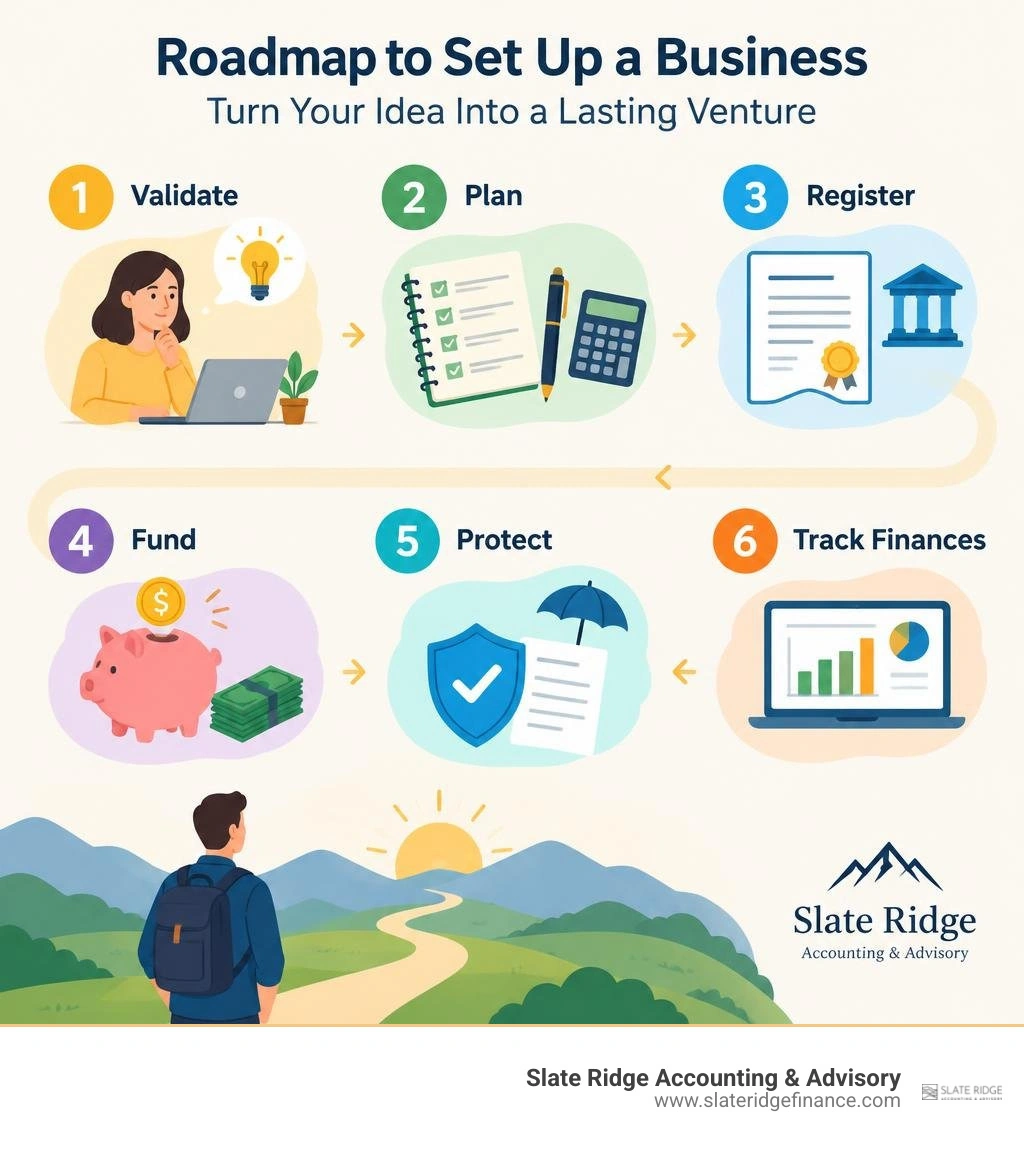
Core Foundations: How to Set Up a New Business for Long-Term Success
Launching a venture is an exhilarating leap, but building something that lasts requires solid fundamentals. According to U.S. Census data, entrepreneurial ambition is at an all-time high: business applications through August 2025 totaled 3.57 million (up 3.15% compared to 2024), with March 2025 alone recording a staggering 507,222 formations.
Yet enthusiasm alone does not guarantee longevity. Only an estimated 79.4% of companies survive their first year in operation, and roughly 20.4% of small businesses fail early due to money troubles, poor planning, or not understanding their market. The good news? About 71% of consumers are actively willing to pay higher rates for better-quality, attentive services from small entrepreneurs.

To position yourself within that successful majority, you need a disciplined framework. Seeking early guidance—such as free counseling resources from the Small Business Administration—can help you de-risk decisions before investing life savings.
Validating Your Market and Concept Before Spending Capital
One of the most frequent rookie mistakes is building a complete product or renting a storefront before confirming that real customers will buy it. Customer discovery must precede major financial commitments.
- Conduct Primary Research: Speak directly to at least 20 to 30 people in your target market. Ask open-ended questions about their current workflow, daily frustrations, and what they pay to resolve those challenges.
- Perform Competitor Analysis: Analyze 3 to 5 direct and indirect competitors. Look at their pricing models, reviews, and client complaints to uncover gaps in the market.
- Refine Your Value Proposition: Clarify why a buyer will choose you over an established player. Are you providing faster turnaround times, specialized niche expertise, or higher-touch support?
- Test Willingness to Pay: A customer saying "that sounds like a neat idea" is not validation. Pre-orders, letters of intent, or paid pilot tests confirm genuine commercial demand.
Drafting an Actionable Business Plan and Financial Model
A business plan does not need to be a dense, 60-page academic thesis. Instead, think of it as an operational compass that aligns your day-to-day work with clear financial objectives.
Your plan should cover:
- Executive Summary: A concise snapshot of your mission, solution, target audience, and leadership.
- Operational Strategy: How you will deliver your goods or services (facilities, software, supply chain).
- Target Demographics & Go-to-Market Plan: The exact marketing channels you will leverage to acquire customers profitably.
- Financial Model & Unit Economics: A breakdown of pricing, variable costs, fixed overhead, and gross margins.
Establishing structured small business financial forecasting early helps identify your break-even point and forecast how many months of runway your cash reserves will support.
Legal Entities and Global Frameworks: Choosing Your Structure

Choosing your legal entity is one of the most significant decisions you will make. It determines your personal liability exposure, your ongoing tax requirements, and how easily you can bring on outside investors or partners.
Comparing Structures: Sole Proprietorships, LLCs, and Corporations
| Business Structure | Personal Liability Protection | Tax Treatment | Setup & Administrative Complexity | Best Suited For |
|---|---|---|---|---|
| Sole Proprietorship | None (owner is personally liable for debts/lawsuits) | Pass-through (reported directly on Schedule C of personal return) | Very Low (no formal state entity formation required) | Low-risk, solo freelance work or testing hobby projects |
| General Partnership | None (all partners have joint and several liability) | Pass-through (Form 1065 partnership informational return) | Low (requires a solid partnership agreement) | Multiple co-founders testing a concept before formal incorporation |
| Limited Liability Company (LLC) | Strong (shields personal assets from business liabilities) | Flexible (pass-through default, with option for S-Corp or C-Corp election) | Moderate (state articles of organization, annual reports) | Most small business owners, service firms, and local operators |
| C Corporation | Strong (complete corporate veil) | Double taxation (corporate income tax plus tax on shareholder dividends) | High (bylaws, board meetings, stock issuance, strict corporate formalities) | Startups seeking venture capital or planning public equity offerings |
For the majority of modern entrepreneurs, the LLC strikes the ideal balance between robust asset protection, operational flexibility, and straightforward tax rules.
How to Setup a New Business in the US, UK, and Australia
If you are evaluating how to setup a new business across different regions, regulatory workflows vary based on jurisdiction:
- United States: Business formation happens at the state level through the Secretary of State. In North Carolina, founders register their entity through the state filing portal guidance provided by the Secretary of State's office, whether setting up shop in Charlotte, Raleigh, Greensboro, Boone, Greenville, Hickory, Morganton, Asheville, or Wilmington. Federal compliance requires securing an EIN from the IRS.
- United Kingdom: You must register a private limited company with Companies House and sign up for Corporation Tax with HM Revenue & Customs (HMRC). If taxable turnover exceeds £90,000, VAT registration is mandatory. Sole traders register for Self Assessment once earning over £1,000 in a tax year.
- Australia: Founders must obtain an Australian Business Number (ABN) through the Australian Business Register and register a company name via the Australian Securities and Investments Commission (ASIC). If annual turnover is projected at $75,000 AUD or more, registering for Goods and Services Tax (GST) is required.
Registration, Licensing, and Protecting Your Brand
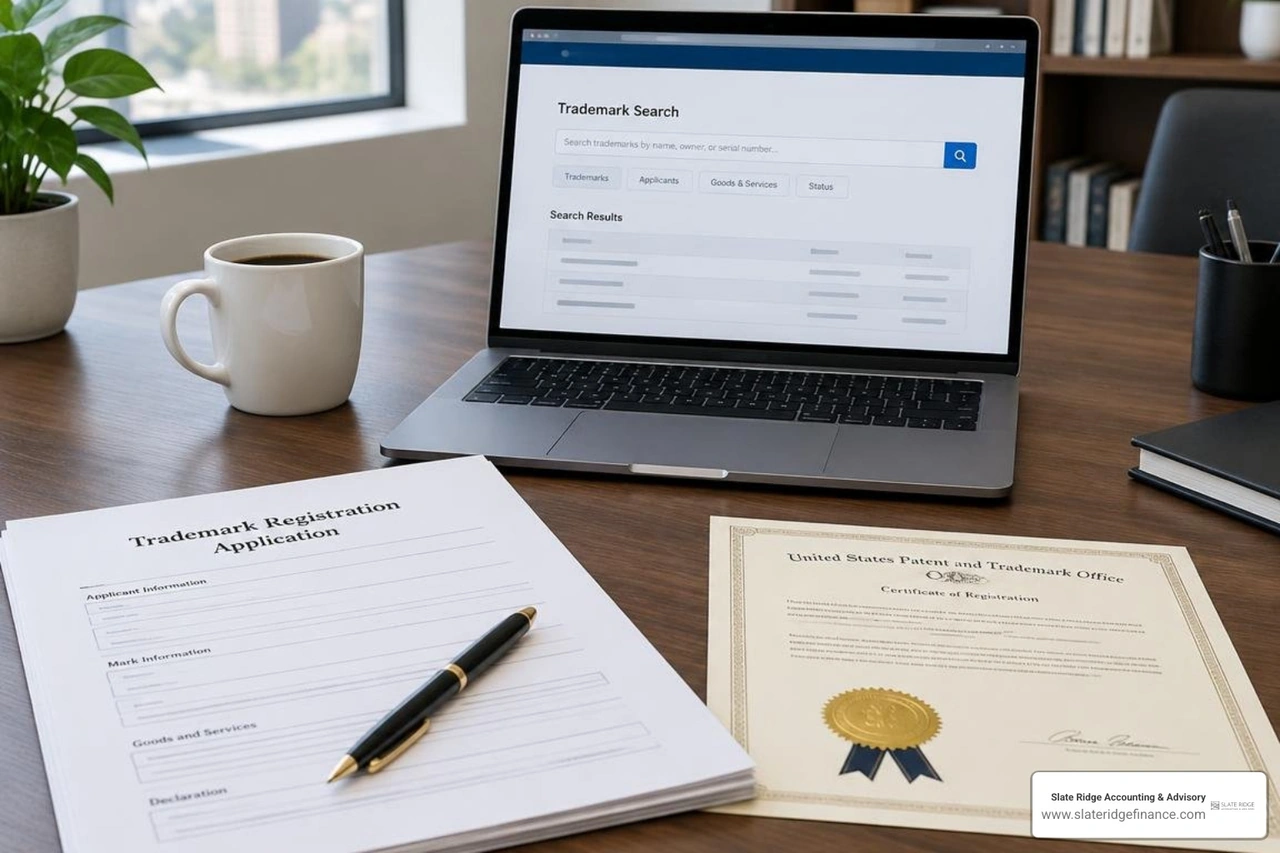
Operating legally means checking off mandatory municipal, state, and federal administrative steps before announcing your launch.
Securing Business Names, Trademarks, and Domains
Your brand name carries long-term value, so protect it early:
- Name Availability: Check state business registries to ensure no existing entity uses your intended legal name.
- Domain & Digital Handles: Secure your
.comweb domain and key social media handles immediately, even if your public launch is months away. - Trademark Clearance: Search the United States Patent and Trademark Office (USPTO) database to avoid infringing on existing registered marks. Registering your trademark prevents competitors from diluting your brand identity.
Navigating Federal, State, and Municipal Permits
Skipping local permits can result in costly administrative fines or forced closures. Common requirements include:
- General Business Licenses: Issued by your local town or county for authorization to conduct commercial trade.
- Zoning & Home Occupation Permits: Required if operating out of a residential property or modifying commercial space.
- Sales Tax Permits: Mandatory if your business sells tangible personal property or taxable digital services.
- Professional & Health Permits: Required for food preparation, personal care, medical practices, construction, and specialized trades.
Financial Systems, Tax Obligations, and Funding Strategies
Cash flow is the lifeblood of any young enterprise. Setting up organized financial systems on day one prevents chaotic tax seasons and protects your legal liability shield.
How to Set Up a New Business Banking and Accounting Architecture
Commirgling personal and business expenses is one of the fastest ways to compromise your LLC’s legal liability protection (known legally as "piercing the corporate veil").
- Open a Dedicated Business Checking Account: Use your approved state formation documents and EIN to establish an account used exclusively for company operations.
- Implement Cloud Accounting: Avoid managing expenses in chaotic spreadsheets. Consult our comprehensive small business accounting guide to understand how automated workflows save dozens of administrative hours each month.
- Deploy Modern Software: Selecting among the best small business accounting systems allows you to sync bank feeds, reconcile transactions in real time, and generate profit-and-loss statements on demand.
Navigating Startup Taxes, EINs, and Early-Stage Funding
Every entrepreneur must master basic tax calendar mechanics:
- Federal Employer Identification Number (EIN): Issued for free by the IRS in minutes online. Required for partnerships, corporations, LLCs with employees, and multi-member entities.
- Estimated Quarterly Taxes: Small business owners generally make quarterly payments to the IRS and state department of revenue (typically in April, June, September, and January) to cover income and self-employment taxes.
- Funding Capitalization: Choose an appropriate capitalization strategy. Many founders bootstrap with personal savings or reinvest early cash flows. Others leverage SBA 7(a) micro-loans, peer-to-peer equipment financing, or angel investments for capital-intensive rollouts.
Risk Management, Hiring, and Operational Launch
Once your financial architecture and legal filings are in place, focus on managing operational risk and building a high-performing team.
Essential Business Insurance Policies and Liability Coverage
Unexpected accidents, property damage, or client disputes can derail an early-stage business. Build a protective insurance umbrella:
- General Liability Insurance: Covers third-party bodily injuries, property damage, and advertising injury.
- Commercial Property Insurance: Protects inventory, computers, tools, and office space from fire, theft, or natural damage.
- Business Owner’s Policy (BOP): Combines general liability and commercial property into a cost-effective bundle, typically running between $500 and $2,000 annually.
- Professional Liability (Errors & Omissions): Essential for service providers, consultants, and advisors to protect against negligence claims or missed project milestones.
- Cyber Liability Insurance: Safeguards your business against customer data breaches, ransom attacks, and system outages.
First-Time Employer Compliance and Payroll Management
Hiring your first team member is an exciting growth milestone, but employment regulations require strict compliance:
- Worker Classification: Correctly classify workers as Form W-2 employees or 1099 independent contractors. Misclassifying employees as contractors carries severe tax and wage penalties.
- Mandatory Onboarding Documentation: Every employee must complete Form W-4 (for federal income tax withholding) and Form I-9 (verifying legal identity and employment authorization) on or before their first day.
- Payroll Tax Calculations: Employers are responsible for withholding federal income tax, Social Security, and Medicare taxes, as well as paying employer-matching FICA and state unemployment taxes (SUTA). Using professional support for calculating payroll taxes ensures timely filings and eliminates penalty risks.
- Workers' Compensation: Most states require employers to maintain workers' compensation insurance coverage immediately upon hiring their first employee.
- Payroll Infrastructure: Implementing scalable payroll services for startups guarantees direct deposits execute seamlessly and tax filings happen automatically.
Frequently Asked Questions About Setting Up a Business
How much money do you need to set up a new business?
Startup costs vary widely across industries. A home-based digital consultancy can launch for under $1,000 (covering entity registration, domain hosting, basic software, and insurance). Conversely, a brick-and-mortar storefront or manufacturing business often requires between $10,000 and $50,000+ to fund leases, build-outs, licenses, and initial inventory. Aim to maintain an emergency operating reserve covering 3 to 6 months of fixed overhead.
Can you start a business while working full-time?
Yes. Many successful founders begin by moonlighting or freelancing during evenings and weekends. However, review your existing employment contract for non-compete agreements, intellectual property assignment clauses, or conflict-of-interest policies. Always use personal equipment and personal time to build your new venture.
How long does it take to get an EIN and register a business?
Applying online through the IRS website yields an Employer Identification Number immediately. State entity registration timelines vary: standard online processing takes between 3 to 15 business days depending on state volume, though most states offer expedited processing for an additional fee.
Build Your Next Venture on Strong Financial Foundations
Starting a business is one of the most rewarding endeavors you can take on. By validating your market early, choosing the right legal structure, maintaining separate finances, and staying ahead of tax compliance, you set your venture up for long-term growth and resilience.
At Slate Ridge Accounting & Advisory, we take the stress out of back-office operations. As a cloud-based firm, we provide modern virtual bookkeeping, financial clean-up, and strategic advisory solutions tailored to help small businesses track KPIs and forecast sustainable growth.
Ready to build your new venture on an unshakeable financial foundation? Explore our virtual accounting and advisory solutions today to schedule a consultation with our team.
Ready to get started?
Book a free consultation today and let’s explore how Slate Ridge can support your business with expert accounting that’s accurate, timely, and built around your goals.
You Might Also Like
A few more posts we think you’ll enjoy on topics that matter to business owners like you.