The Power of Online Small Business Accounting
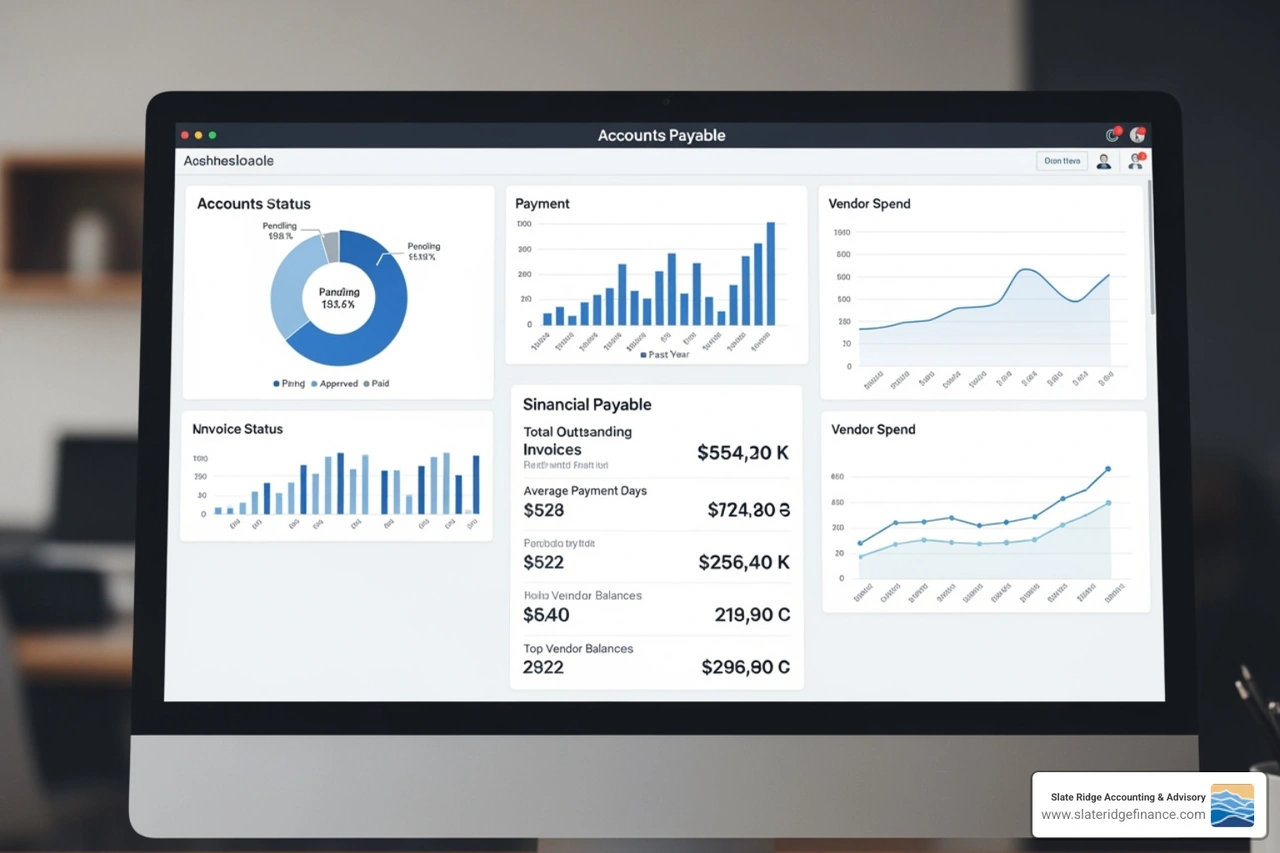
Looking to manage your small business finances better? Online small business accounting software is built to simplify your financial life. It’s a key tool for modern businesses looking to grow efficiently.
Here's why small businesses embrace online accounting:
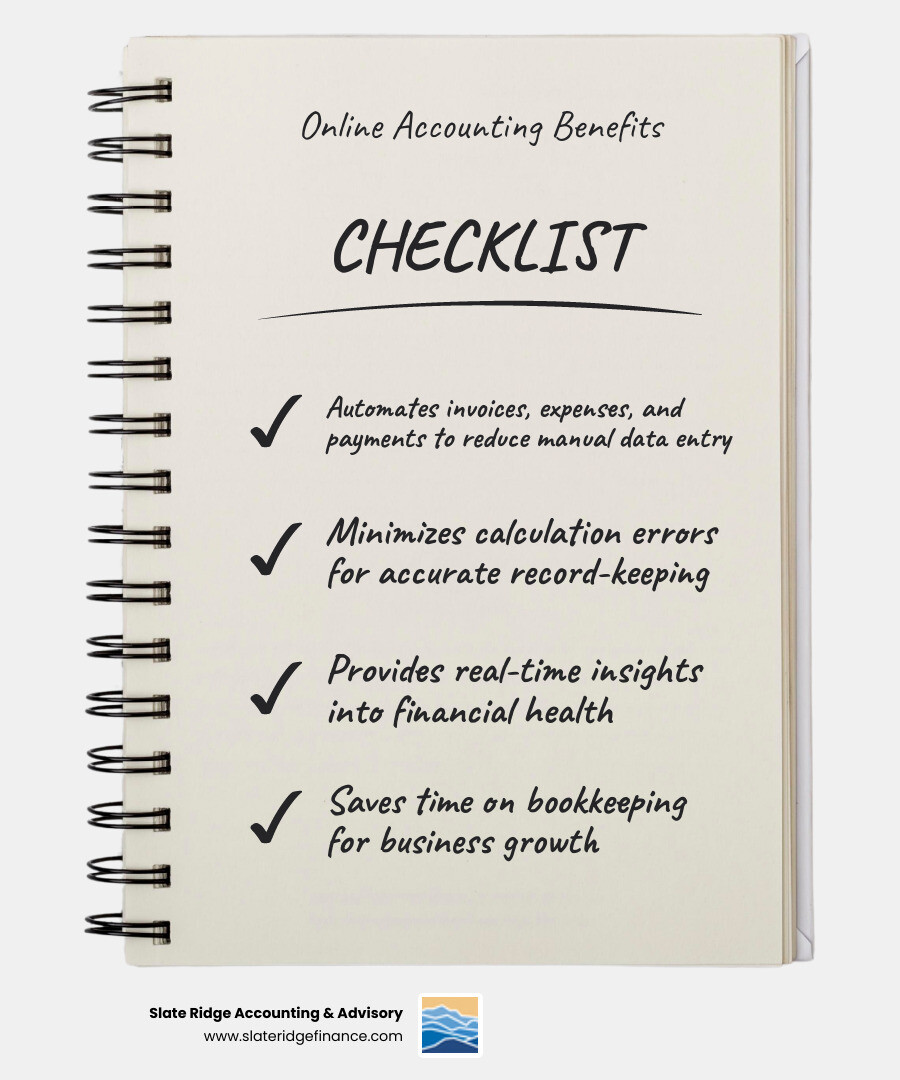
- Automates Tasks: Reduces manual data entry for invoices, expenses, and payments.
- Boosts Accuracy: Minimizes errors in calculations and record-keeping.
- Ensures Compliance: Helps keep your books ready for tax season and audits.
- Provides Real-time Insights: Gives you a clear, up-to-date view of your financial health.
- Saves Time: Frees up hours you can spend on growing your business, not bookkeeping.
Many small business owners feel swamped by paperwork. They struggle with messy records and administrative burdens. This can make growth decisions hard. Online accounting offers a clear path to better financial health. It empowers you to make informed choices for your business's future.
Simple online small business accounting word guide:
Why Online Small Business Accounting is Essential for Growth
In the markets of North Carolina—from the tech hubs of Raleigh to the bustling streets of Charlotte—staying on top of your numbers isn't just a "nice to have"; it's a survival requirement. Traditional, manual bookkeeping is like trying to drive a car with a foggy windshield. You might be moving, but you can't see where you're going or what obstacles are ahead.
Online small business accounting clears that windshield. By using cloud-based tools, you gain real-time data that allows for proactive cash flow management. Research shows that while accounting principles can be universally applied, small business owners have unique needs that require personalized solutions. These tools reduce human error by pulling data directly from bank feeds, ensuring that your records remain accurate and "IRS-ready" throughout the year.
When you follow accounting best practices for small business, you transition from just recording history to predicting the future. You can see which expenses are growing faster than revenue and identify where you might be "bleeding" money. For instance, some businesses find they are wasting thousands of dollars a month on unused subscriptions or inefficient processes simply because they didn't have the visibility to catch them.
Automation and AI in Online Small Business Accounting
The modern accounting landscape is being transformed by AI. We aren't just talking about simple calculators; we're talking about "Agentic AI" and intelligent "Accounting Agents." Unlike standard generative AI that just creates text, Agentic AI is goal-oriented. It performs actions like extracting data from a photo of a receipt, automatically categorizing a transaction based on your past behavior, and flagging anomalies in your profit and loss statements.
For a busy entrepreneur in Asheville or Wilmington, this means the software "learns" your business. If you categorize a purchase from an office supply store once, the AI remembers. Over time, your manual workload drops significantly. This level of virtual accounting allows you to focus on leading your company rather than being buried in spreadsheets.
Ensuring Data Security and Compliance
We know that "the cloud" can sound intimidating to some business owners. However, modern online small business accounting platforms often provide higher security than a physical file cabinet or a local hard drive. Leading providers use 256-bit SSL encryption—the same level of security used by major banks—to protect your data.
Furthermore, being a PCI-DSS Level 1 Service Provider ensures that credit card information is handled with the highest standards of safety. For businesses in North Carolina, staying compliant with state and federal tax laws is easier when your software automatically tracks sales tax and generates the reports your CPA needs. Using a cloud accounting services guide can help you understand how these layers of protection keep your business safe from data loss and audits.
Key Features of Modern Online Small Business Accounting Tools
When you're shopping for a solution, it's easy to get distracted by "shiny" features that you might never use. To get the most out of your investment, focus on the core tools that drive daily efficiency.
The "must-haves" include:
- Invoicing: The ability to send professional, pay-enabled invoices. Some users report that switching to automated invoicing resulted in zero unpaid invoices over several years.
- Expense Tracking: Seamlessly connecting your bank accounts and credit cards to import transactions.
- General Ledger: The backbone of your financial records, keeping your debits and credits in balance.
- Accounts Payable/Receivable: Knowing exactly who owes you money and who you need to pay.
- Payroll Integration: Paying your team (and yourself) while staying compliant with tax withholdings.
| Feature | Importance | Benefit |
|---|---|---|
| Bank Feeds | High | Eliminates manual data entry |
| Mobile App | Medium | Manage finances on-the-go |
| Multi-user Access | High | Collaboration with your accountant |
| Financial Reporting | High | Data-driven decision making |
| Tax Mapping | Medium | Simplifies year-end filing |
Essential Integrations for Online Small Business Accounting
Your accounting software shouldn't be an island. It needs to talk to the other tools you use to run your business. This is where modern accounting systems truly shine.
For example, if you run a retail shop in Greensboro, your accounting software should sync with your Point of Sale (POS) system. If you're a consultant in Charlotte, it should integrate with your project management tools to turn billable hours into invoices with one click. Other vital integrations include e-commerce platforms (like Shopify), CRM systems, and even mileage trackers that use your phone's GPS to log business trips for tax deductions.
How to Evaluate Online Small Business Accounting Solutions
Selecting the right software is a big decision. We recommend evaluating options based on these five pillars:
- Scalability: Will this software work when you have 20 employees, or only when it's just you?
- Budget: Look beyond the "introductory" price. Consider the cost of add-ons like payroll or additional users.
- Ease of Use: If the interface is too technical, you won't use it. Most small business tools are designed for non-accountants, but some have steeper learning curves than others.
- Customer Support: When you're reconciling your books at 9 PM on a Sunday, what kind of help is available? Look for platforms with robust help centers and live messaging.
- Customization: Can you tailor the chart of accounts to fit your specific industry?
For a deeper dive into these factors, check out our comprehensive accounting systems guide.
How Business Type Influences Your Software Choice
A freelance graphic designer in Boone has very different needs than a manufacturing startup in Hickory. Your business model dictates which features are "essential" and which are "excess."
- Freelancers & Solopreneurs: You need simplicity. Your focus is likely on invoicing, expense tracking, and keeping personal and business finances separate.
- Retail Businesses: You need robust inventory management and seamless POS integrations to track product sales and sales tax accurately.
- Service-Based Businesses: Time tracking and project-based billing are your priorities. You want to see which clients are most profitable.
- Startups & Growing Enterprises: You need "smart insights" and the ability to model different growth scenarios. You're likely looking for a system that supports accrual accounting to satisfy investors.
Understanding these nuances is key to managing your small business accounting costs effectively.
Setting Up Your Online Accounting System
Ready to make the leap? Setting up your system correctly from day one prevents massive headaches later. Follow these three basic steps:
- Open Dedicated Business Accounts: Never mix business and personal funds. This is the #1 rule of small business accounting.
- Choose Your Accounting Method: Decide between Cash (recording income when you receive it) and Accrual (recording income when you earn it). While cash is simpler, accrual provides a more accurate picture of long-term health.
- Migrate Your Data: If you're moving from a different system, you can often import your chart of accounts, contacts, and open invoices via CSV files.
For a smooth transition, we often recommend working with a professional who has experience in cloud-based accounting to ensure your "opening balances" are correct.
Frequently Asked Questions about Small Business Accounting
What is the difference between cash and accrual accounting?
Cash accounting records transactions only when money changes hands. Accrual accounting records them when the transaction occurs (e.g., when you send an invoice), even if you haven't been paid yet. Accrual is generally better for businesses with inventory or those looking to scale.
How does AI improve small business bookkeeping?
AI reduces the "grunt work." It can read receipts, suggest categories for expenses, and even reconcile your bank statements automatically. This reduces human error and ensures your books are always up to date.
Is my financial data safe in the cloud?
Yes. Reputable online small business accounting providers use bank-level encryption (256-bit SSL) and maintain multiple backups in secure data centers. This is often much safer than keeping financial records on a single laptop that could be lost, stolen, or damaged.
Conclusion
At Slate Ridge Accounting & Advisory, we believe that you didn't start your business to become a full-time bookkeeper. Whether you are located in Raleigh, Charlotte, or right here in Asheville, our goal is to provide the modern, personalized financial solutions you need to thrive.
We don't just "do the books." We help you track KPIs, forecast growth, and clean up financial messes so you can make data-driven bets on your future. If you're ready to stop digging through spreadsheets and start leading your company with confidence, it's time to explore a better way.
Get started with Virtual Accounting today and let us help you see your business clearly.
Ready to get started?
Book a free consultation today and let’s explore how Slate Ridge can support your business with expert accounting that’s accurate, timely, and built around your goals.
You Might Also Like
A few more posts we think you’ll enjoy on topics that matter to business owners like you.