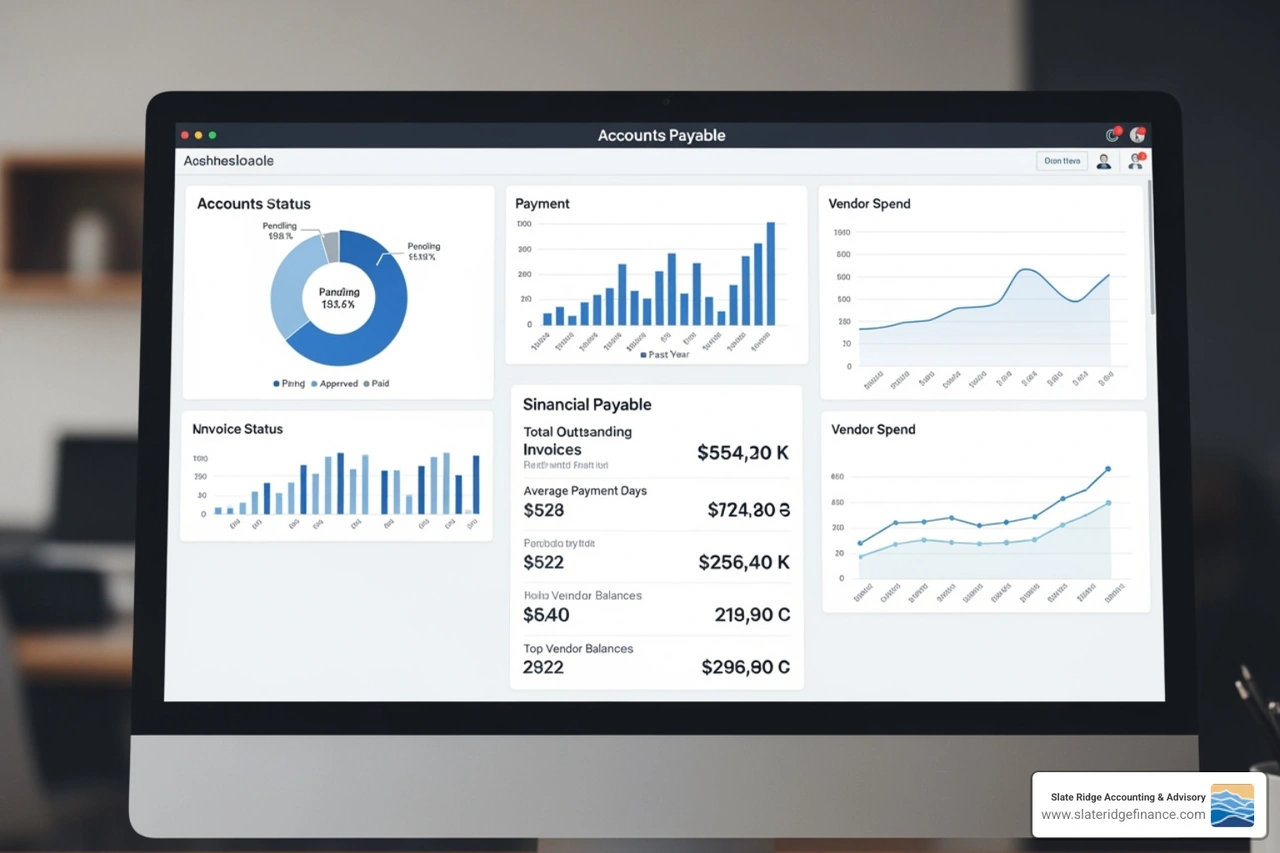

Why Financial Planning Is the Backbone of Every Small Business
Financial planning for small business is the process of setting clear financial goals, forecasting revenue and expenses, managing cash flow, and building a roadmap that guides every major money decision in your business.
Here's a quick overview of what it involves:
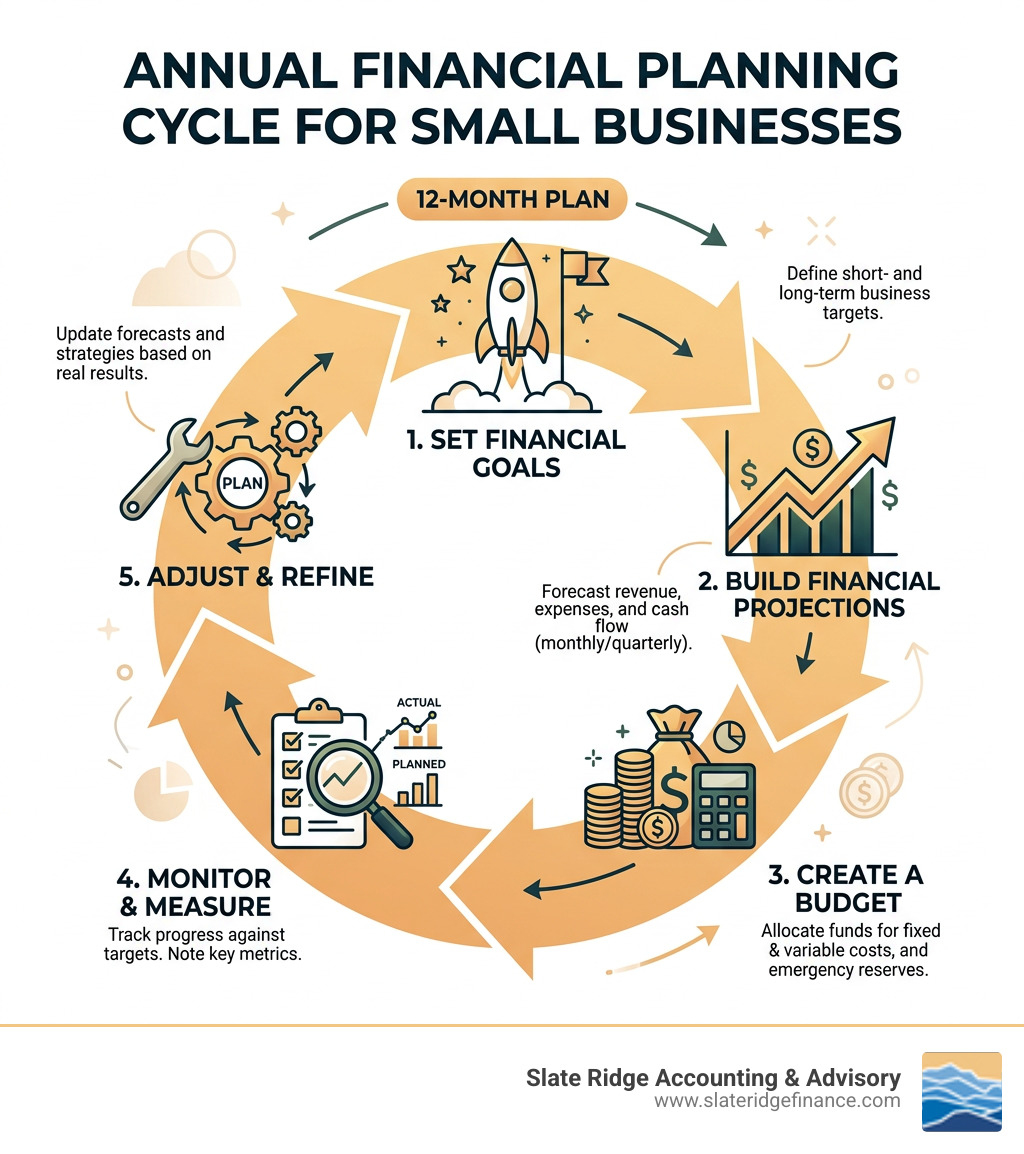
- Set financial goals - Define short- and long-term targets tied to your business strategy
- Build financial projections - Forecast revenue, expenses, and cash flow (monthly or quarterly)
- Create a budget - Break down fixed costs, variable costs, and emergency reserves
- Plan for risks - Maintain 3-6 months of operating expenses as a buffer
- Monitor and adjust - Review your plan at least quarterly against real results
- Plan for taxes, insurance, and retirement - Don't leave these as afterthoughts
There are over one million small businesses operating across Canada with fewer than 100 employees. Most of them share the same challenge: the business is running, but the money feels chaotic.
As management consultant Peter Drucker put it, "The purpose of business is to create and keep a customer." But without a financial plan, even a business full of loyal customers can run out of cash, miss tax deadlines, or struggle to grow.
Think of a financial plan as your business's GPS. It doesn't just tell you where you are — it helps you plot the route, avoid detours, and arrive where you actually want to go.
Without one, most owners end up in reaction mode: spending as money comes in, making pricing decisions based on gut feelings, and only realizing they're under-earning when a tax bill arrives.
This guide will walk you through everything you need to build, manage, and maintain a financial plan that keeps your business stable and growing.
Financial planning small business terms to learn:
The Strategic Importance of Financial Planning Small Business

When we talk to business owners in Asheville or Charlotte, we often hear that they started their company because they had a passion for a product or a skill—not because they loved spreadsheets. However, financial planning small business is what transforms a passionate hobby into a viable, long-term enterprise.
Strategic financial planning is more than just a survival tactic; it’s about aligning your daily bank transactions with your big-picture dreams. Whether you want to open a second location in Raleigh or hire your first employee in Wilmington, you need to know if the numbers support that move. A solid plan ensures that you aren't just "keeping the lights on," but actually building equity and value.
One of the biggest benefits of a formal plan is investor and lender attraction. If you ever decide to apply for a loan or seek outside investment, the first thing a bank will ask for is your financial roadmap. They want to see that you understand your margins, your risks, and your growth potential. Proactive planning demonstrates that you are a responsible steward of capital.
Furthermore, risk mitigation is a huge part of the equation. We live in an unpredictable world—supply chain issues, shifting market trends, or unexpected repairs can sink a business that doesn't have a contingency plan. By identifying potential threats early, we can help you build the "armor" your business needs to survive a rainy day.
If you're feeling overwhelmed by the technicalities, seeking Expert Financial Advice can provide the clarity you need. Modern solutions like Virtual Financial Planning allow us to work together regardless of whether you're based in Hickory or Greensboro, ensuring your strategy is always up to date.
Core Components of Financial Planning Small Business
To master your finances, you need to understand the "Big Three" financial statements. Think of these as the dashboard of your car:
- Income Statement (P&L): This tells you if you made a profit or a loss over a specific period. It lists your revenue minus your expenses.
- Balance Sheet: This is a snapshot of your business health at a specific moment. It shows what you own (assets), what you owe (liabilities), and what’s left for you (equity). The golden formula here is: Shareholder Equity = Assets – Liabilities.
- Cash Flow Projection: This is perhaps the most critical for small businesses. It tracks the timing of money coming in and going out. You can be "profitable" on paper but still go bust because you don't have enough cash in the bank to pay your rent this month.
Beyond these, a comprehensive plan should include a Personnel Plan (to align hiring with your budget) and a review of Business Ratios. Ratios like your net profit margin or quick ratio help you compare your performance against industry benchmarks. For a deeper dive into these elements, check out this How to Make a Financial Plan for Your Business: A Step-by-Step Guide.
Forecasting and Projections in Financial Planning Small Business
Forecasting is essentially "educated guessing" about the future. We look at historical data (what happened last year) and market trends (what’s happening in North Carolina right now) to predict what will happen next.
- Revenue Estimation: We look at your sales pipeline, seasonal patterns, and pricing strategy to estimate future income.
- Expense Forecasting: This involves listing your fixed costs (rent, insurance) and variable costs (materials, shipping). We always recommend being conservative here—assume things will cost a bit more than you hope!
- Scenario Planning: What if sales grow by 10%? What if your biggest client leaves? By creating "Best Case," "Worst Case," and "Most Likely" scenarios, you’re never caught off guard.
Utilizing Business Financial Forecasting allows you to make data-driven decisions rather than emotional ones. When combined with regular Financial Performance Analysis, you can spot trends before they become problems.
4 Steps to Building Your Financial Roadmap
Building a roadmap doesn't have to be a headache. We recommend a structured four-step approach:
- Conduct a SWOT Analysis: Before looking at the numbers, look at the business. What are your Strengths, Weaknesses, Opportunities, and Threats? This qualitative look helps inform the quantitative goals.
- Set Clear Objectives: Do you want to increase revenue by 20%? Reduce debt by $10,000? Objectives should be SMART: Specific, Measurable, Achievable, Relevant, and Time-bound.
- Develop a Contingency Plan: This is your "Plan B." It includes maintaining cash reserves or securing a line of credit before you actually need it. Experts recommend a buffer of 10-20% above anticipated expenses for unforeseen circumstances.
- Performance Monitoring: A financial plan isn't a "set it and forget it" document. You need to compare your actual results against your projections every month. If you’re off track, you can adjust your spending or sales strategy before it’s too late.
For more help getting started, see these 7 Essential Steps for Small Business Financial Planning.
Mastering Cash Flow and Budgeting Strategies
Cash is the lifeblood of your business. You can have the best product in Greensboro, but if you can't pay your suppliers, the lights go out.
We often recommend the 50/30/20 rule for business income:
- 50% goes toward operating expenses.
- 30% is reinvested for growth.
- 20% is set aside for future development and taxes.
To stay safe, you should aim to maintain 3-6 months of operating expenses in an emergency fund. This liquidity ensures you can survive a slow season or a sudden market shift.
Fixed vs. Variable Operating Costs
Understanding the difference between these costs is vital for accurate budgeting:
| Cost Type | Definition | Examples |
|---|---|---|
| Fixed Costs | Expenses that stay the same regardless of sales volume. | Rent, insurance, salaries, software subscriptions. |
| Variable Costs | Expenses that fluctuate based on how much you sell. | Raw materials, shipping fees, sales commissions, credit card processing. |
By keeping a close eye on these, you can identify areas to cut back if revenue dips. For instance, if sales are slow, you can reduce your variable costs (like marketing or inventory orders) while your fixed costs (like rent) remain the same.
Long-Term Stability: Taxes, Insurance, and Retirement
As your business grows, you have to look beyond the next month and start thinking about the next decade. This involves three key pillars:
1. Tax Obligations and DeadlinesMissing a tax deadline is an expensive mistake. In the US, business structures have different requirements. For example, you must apply for an Employer Identification Number (EIN) to hire employees and open business bank accounts.
If you have international operations or are a Canadian-based entity, you must follow specific rules. The Canada Revenue Agency (CRA) states that corporations must file their returns within six months of the end of each fiscal year. For our North Carolina clients, sole proprietors often have a tax deadline of April 15th, while partnerships and S-corps may need to file by March 15th.
2. Insurance and Risk ProtectionHave you considered what would happen if a key partner or employee was suddenly unable to work? Key Person Insurance can provide a financial cushion during such a transition. Additionally, having proper general liability and professional indemnity insurance is non-negotiable for long-term stability.
3. Succession and Retirement PlanningAre you building a business to sell it, or do you want to pass it on to your children? Succession planning should be integrated into your financial plan early on. You also need to ensure you're paying yourself enough to contribute to retirement accounts like a SEP-IRA or Solo 401(k).
For those looking for government-backed support, programs like the Canada Small Business Financing Program (CSBFP) (for our northern neighbors) or SBA loans in the US can provide the capital needed for renovations, equipment, or working capital.
Frequently Asked Questions about Small Business Finance
How often should a financial plan be updated?
We recommend a quarterly review at a minimum. However, your budget should be monitored monthly. If there is a significant market shift—like a new competitor opening in Boone or a sudden change in interest rates—you should revisit your plan immediately. Real-time monitoring through cloud-based accounting software makes this much easier.
What are common financial planning mistakes to avoid?
- Blending personal and business finances: This is the #1 mistake. Always use a dedicated business bank account and credit card.
- Underestimating variable costs: Don't forget about shipping, merchant fees, and "sundry" expenses.
- Overestimating revenue: It’s better to be pleasantly surprised by a surplus than stressed by a shortfall.
- Neglecting contingency funds: Without an emergency reserve, one broken piece of equipment can stop your operations.
How does a financial plan help secure business funding?
A well-documented plan builds lender confidence. It shows that you have a clear grasp of your debt-to-equity ratios and that you have a strategy for repayment. It moves the conversation from "I think I need money" to "I have a proven growth model that requires X amount of capital to achieve Y results."
Conclusion
At Slate Ridge Accounting & Advisory, we believe that every small business owner in North Carolina deserves the peace of mind that comes with a professional financial roadmap. Whether you're in Asheville, Hickory, or Raleigh, our cloud-based solutions provide you with the tools you need to succeed.
We offer:
- Virtual Bookkeeping: Keeping your records accurate and up-to-date.
- Financial Clean-up: Fixing past errors so you can move forward with confidence.
- Advisory Services: Helping you track KPIs and Grow Small Business through strategic Financial Forecasting Services.
Don't let your finances be a source of stress. Take control of your future today.
Book a complimentary consultation to align your business strategy with your long‑term goals and discover how Personalized Financial Solutions can transform your business. Whether you need an Online Financial Advisory or a local partner in North Carolina, we are here to help you keep the lights on—and shining bright.
Ready to get started?
Book a free consultation today and let’s explore how Slate Ridge can support your business with expert accounting that’s accurate, timely, and built around your goals.
You Might Also Like
A few more posts we think you’ll enjoy on topics that matter to business owners like you.