_compressed.avif)
Why "What Gets Measured, Gets Managed" is Your New Business Mantra
_compressed.webp?alt=media&token=611cc5a4-3c92-446f-8b3c-db1114083e10 "Business performance tracking")
Business performance tracking is the systematic process of monitoring key metrics to see how your business is performing against its goals. To get started, you must:
Essential Components:
- Define Your Goals - Establish clear, measurable objectives.
- Select Key Metrics - Choose 5-10 KPIs that align with your goals.
- Track Consistently - Monitor metrics regularly using dashboards or reports.
- Analyze and Adjust - Review data to find trends and opportunities.
- Take Action - Use insights to make informed decisions.
As the old adage goes, "If it can be measured, it can be managed." Yet many small business owners struggle with data overload, unsure which numbers actually matter. The reality is that companies actively monitoring performance are significantly more likely to achieve profitable growth. You don't need to track everything—just the right things.
This guide will show you how to identify meaningful metrics, understand your financial health, and create simple dashboards to see what's working. We'll cover department-specific metrics and show you how to turn data into actionable strategies, providing a clear roadmap for making smarter business decisions.

The Foundation: Understanding Your Key Performance Indicators (KPIs)
At the heart of effective business performance tracking is understanding what to measure and why. While "metrics" and "KPIs" are often used interchangeably, their strategic purpose sets them apart. Both are quantitative measurements, but KPIs tell a story about your progress toward specific, strategic goals.
Companies that monitor Key Performance Indicators (KPIs) are far more likely to achieve profitable growth. To do this effectively, we set SMART goals for our KPIs: Specific, Measurable, Attainable, Relevant, and Time-bound. This framework ensures our efforts are focused and progress is tangible. While KPIs offer clarity, it's wise to avoid focusing too narrowly on numbers without considering the full business context.
Knowing how to track these numbers can feel daunting. Our guide on How to Track KPIs is designed to simplify the process for small businesses.
The Critical Difference: Metrics vs. KPIs
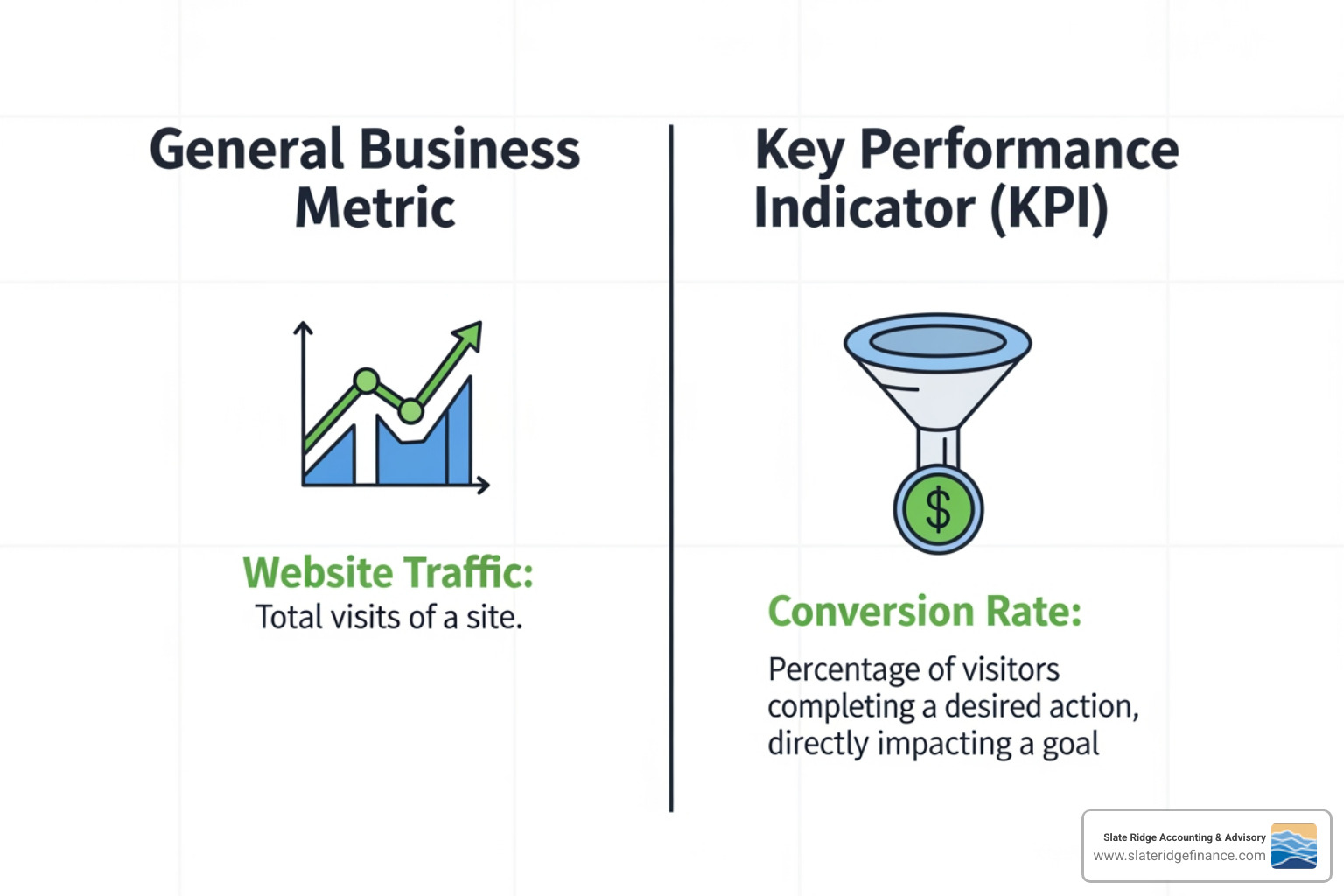
Let's clarify the difference between a metric and a Key Performance Indicator (KPI). A metric is any general measure of performance, tracking activities and processes within a department. Think of website traffic, social media followers, or sales calls—these are all metrics.
However, KPIs are a strategic subset of metrics. As experts in Understanding Metrics: Key to Performance Tracking and Analysis explain, KPIs are chosen to monitor and drive progress toward specific organizational goals. The key is intent. A KPI is a metric with a purpose. For example, while "website traffic" is a metric, "conversion rate from website traffic" becomes a KPI if your goal is to increase online sales, as it directly measures progress toward that objective.
Types of KPIs to Monitor
To gain a holistic view of your business, it's helpful to categorize KPIs into four broad types:
- Strategic KPIs: These offer a high-level overview of your business's overall health and long-term goals, such as annual revenue growth or market share.
- Operational KPIs: These focus on shorter timeframes, tracking the efficiency of daily activities like customer service response time or production volume.
- Functional KPIs: These are specific to individual departments. A marketing team might track "cost per lead," while HR monitors "employee turnover rate."
- Leading vs. Lagging Indicators: This distinction is about timing.
- Leading Indicators: These are predictive and give insight into future performance (e.g., "number of sales leads generated").
- Lagging Indicators: These are backward-looking and measure past results (e.g., "total sales revenue").
A balanced set of KPIs will include both leading and lagging indicators, providing foresight and a clear assessment of past achievements.
Building Your Performance Dashboard
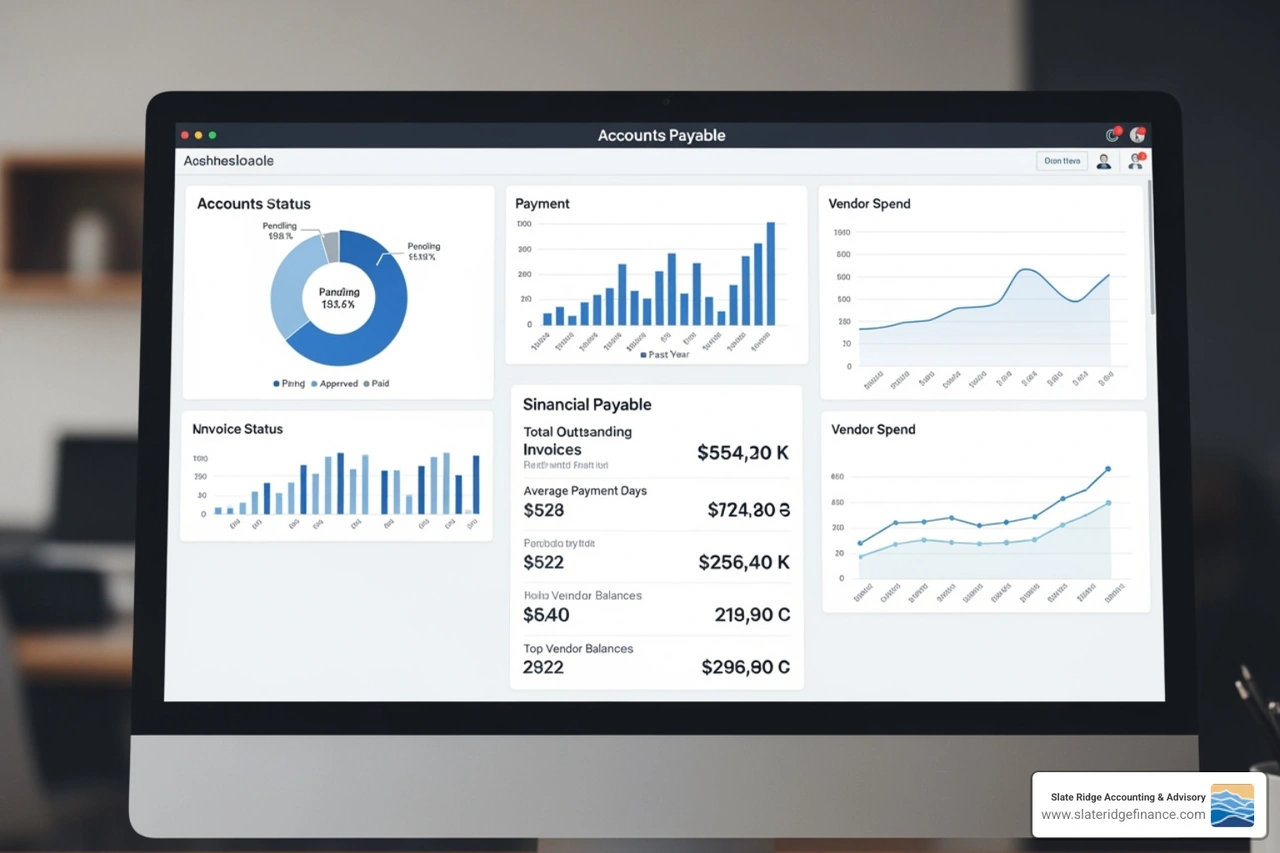
A well-designed performance dashboard is a visual representation of your most critical KPIs, offering real-time insights into your business's health.
Key components of an effective dashboard include:
- Real-Time Data Visualization: Transform raw data into easy-to-understand charts and graphs to quickly identify trends.
- Customizable Widgets: The best KPI tools allow you to tailor the dashboard to display the KPIs most relevant to your specific goals.
- Setting Alerts: Get notified via email or Slack when a critical KPI deviates from its target, allowing you to address issues or seize opportunities swiftly.
- User-Friendliness: A powerful tool is only useful if people use it. The best tools balance powerful features with a user-friendly design to ensure team adoption.
The goal is to create a central hub for monitoring business health, tracking progress, and making data-driven decisions together.
Financial Health Check: Using Ratios for Performance Tracking
Financial ratios help translate complex financial data into actionable insights, providing a clear picture of your business's financial health. By setting financial KPIs based on these ratios, you can proactively monitor operations and make informed decisions. For small businesses across North Carolina, robust Financial Performance Analysis is a fundamental step toward sustainable success.
Leveraging Financial Ratios for Business Performance Tracking
Financial ratios distill vast amounts of information into digestible figures. They help measure liquidity, operations, profitability, and financing capacity.
- Liquidity Ratios: These measure your ability to meet short-term obligations.
- Current Ratio: Current Assets / Current Liabilities. A ratio above 1.0 is generally healthy, but a ratio above 3.0 could suggest inefficient use of capital.
- Quick Ratio (Acid-Test Ratio): (Current Assets - Inventory) / Current Liabilities. This is a stricter measure that excludes inventory.
- Profitability Ratios: These assess your ability to generate earnings.
- Gross Profit Margin: (Revenue - Cost of Goods Sold) / Revenue. This indicates pricing strategy and production efficiency.
- Net Profit Margin: (Net Income / Total Revenue) x 100. This is the ultimate measure of profitability, showing profit after all expenses.
- Operational Efficiency Ratios: These evaluate how effectively you use assets to generate sales.
- Inventory Turnover: Cost of Goods Sold / Average Inventory. This shows how many times inventory is sold and replaced over a period.
- Accounts Receivable Turnover: Net Credit Sales / Average Accounts Receivable. This measures how efficiently you collect payments.
- Solvency Ratios: These assess long-term financial stability.
- Debt-to-Equity Ratio: Total Debt / Shareholder Equity. This indicates how much of your financing comes from debt versus equity.
From Ratios to Actionable Goals
Once you've calculated these ratios, the real work begins: turning them into actionable goals. This is about using the numbers to identify specific areas for improvement.
For example, if your Gross Profit Margin is below industry benchmarks, you might set a KPI to increase it by 2% next quarter. This goal prompts you to look at strategies like optimizing pricing or negotiating with suppliers. If your Accounts Receivable Turnover is slow, you might implement new collection policies.
This data-driven approach allows you to set realistic targets and ensure your efforts are tied to tangible outcomes. It also helps evaluate the effectiveness of Cost Reduction Strategies by seeing their impact on profitability and efficiency.
Department-Specific Success Metrics for Holistic Business Performance Tracking
For a business to thrive, every team needs to understand its contribution. Department-specific success metrics give employees clear, measurable goals, driving accountability and aligning everyone's efforts toward company objectives. This clarity is crucial for collective success.
Our research shows that companies can use KPIs at company-wide, department-wide, and project levels. This structured approach helps employees see how their daily tasks contribute to strategic goals, fostering better prioritization and a shared purpose. This is key to open uping business potential and is a cornerstone of effective 27 business success metrics you should be tracking.

Marketing and Sales Metrics
These metrics ensure your growth engines are running efficiently.
- Leads Generated: Tracks the number of potential customers from marketing efforts. A crucial leading indicator for future sales.
- Customer Acquisition Cost (CAC): Total marketing and sales spend / Number of new customers. Keeping this low is key.
- Customer Lifetime Value (CLV): The total revenue expected from a customer over their entire relationship with your business.
- Lead-to-Customer Conversion Rate: The percentage of leads that become paying customers, measuring sales process effectiveness.
- Return on Marketing Investment (ROMI): (Sales growth - Marketing cost) / Marketing Investment x 100. Helps optimize marketing spend.
Customer Success and Operations Metrics
These metrics focus on customer happiness and internal efficiency.
- Net Promoter Score (NPS): A measure of customer loyalty, calculated as the percentage of promoters minus the percentage of detractors.
- Customer Churn Rate: The rate at which you lose customers. A high churn rate can signal product or service issues.
- Average Resolution Time: How long it takes your team to resolve a customer issue. Faster is usually better.
- Production Downtime: Measures periods when operations are halted. Minimizing this is critical for efficiency.
- On-time Delivery: The percentage of orders delivered by the promised date, directly impacting customer satisfaction.
HR and Finance Metrics
These metrics ensure a healthy workforce and robust financial management.
- Employee Turnover Rate: The percentage of employees who leave the company. High turnover can indicate morale or hiring issues.
- Revenue Per Employee: Total revenue / Current number of employees. An insight into productivity.
- Employee Satisfaction: Often measured through surveys (e.g., eNPS). Happy employees are more productive.
- Working Capital: Current assets - Current liabilities. Indicates short-term liquidity.
- Operating Cash Flow: Cash generated from regular business operations. Crucial for funding growth.
From Data to Decisions: Reporting, Forecasting, and Strategy
The true power of data lies in how you use it to make informed strategic choices and drive continuous improvement. Effective business performance tracking isn't just about collecting numbers; it's about turning them into a roadmap for the future, which is integral to developing robust Business Growth Strategies.
Creating Effective Management Reports
Management reports tell the story of your performance. To be effective, they need to be more than just a data dump.
Key elements of a strong KPI report include:
- Clarity and Conciseness: Present data in an easy-to-understand format.
- Data Visualization: Use charts and graphs to highlight trends and outliers.
- Strategic Alignment: Link each KPI back to a specific business objective.
- Actionable Insights: Interpret what the data means and suggest what actions should be taken.
- Regular Communication: Use dashboards to communicate key financial information across the business.
- Incorporating Forecasting: Include forecasts to improve planning across all business lines.
The goal of a KPI report is to inform decisions. By creating clear, insightful Financial Reporting Services, you empower your team to make the best choices for the business.
The Role of Forecasting in Performance Management
If reporting tells you where you've been, forecasting helps anticipate where you're going. It's a critical part of business performance tracking that uses historical data to predict future outcomes.
Forecasting enables proactive management by helping you:
- Predict Future Outcomes: Project future revenue, cash flow, and resource needs for better budgeting.
- Scenario Planning: Model different scenarios (e.g., losing a client, entering a new market) to build resilience.
- Adjust Strategies: When forecasts deviate from actual performance, it signals a need to re-evaluate your strategy and make timely course corrections.
Incorporating forecasting into our management reports provides a more dynamic, forward-looking view of your business. Our Business Financial Forecasting expertise helps businesses develop robust forecasts that drive better performance.
Advanced Tools and Strategies for Improvement
Once you've mastered the basics of business performance tracking, you can employ advanced tools and strategies. This is where you go beyond monitoring numbers and start using data to gain a competitive edge and drive continuous improvement for your North Carolina business.
Benchmarking: Measuring Up to the Best
Knowing how you perform internally is great, but knowing how you stack up against others is golden. Benchmarking is a strategic tool that involves comparing your business's performance against others known for superior performance or best practices. The purpose is to identify performance gaps and set ambitious targets for improvement.
Types of benchmarking include:
- Internal Benchmarking: Comparing performance between different departments within your organization.
- Competitive Benchmarking: Directly comparing your performance against key competitors.
- Functional Benchmarking: Comparing a specific function (e.g., logistics) with non-competing businesses known for excellence in that area.
A structured benchmarking process involves defining KPIs, quantifying your performance and the benchmark's, identifying gaps, setting targets, and implementing initiatives to close those gaps. By consistently measuring against the best, you can continuously refine your strategies.
How Slate Ridge Can Help You Track KPIs
We know that implementing robust business performance tracking can feel overwhelming for small business owners. That's where Slate Ridge Accounting & Advisory comes in. As a cloud-based accounting firm, we provide modern, personalized financial solutions to empower your business.
Our unique selling proposition is helping small businesses track KPIs and forecast growth. We don't just crunch numbers; we turn them into actionable intelligence. Here’s how we help:
- Virtual Bookkeeping & Financial Clean-up: We ensure your financial data is accurate and organized, providing a clean foundation for reliable KPI tracking across North Carolina.
- Personalized KPI Selection: We work with you to identify the most relevant KPIs for your specific business and industry goals.
- Customized Dashboards & Reporting: We help set up intuitive dashboards to visualize your KPIs in real-time and provide clear reports with key insights.
- Expert Financial Advisory: We help you interpret your performance data, identify strategic weak points, and uncover growth opportunities.
- Forecasting & Strategic Planning: We integrate KPI tracking with robust financial forecasting to help you plan strategically and prepare for the future.
With Slate Ridge, you gain a dedicated financial partner committed to helping you leverage data for better decision-making and sustainable growth, in line with modern accounting practices.
Frequently Asked Questions about Business Performance Tracking
What is the difference between a performance metric and a KPI?
A performance metric is any quantifiable measure of performance. A KPI is a specific metric strategically chosen to track progress toward a critical business objective. All KPIs are metrics, but not all metrics are KPIs.
What are 5 of the most common KPIs for a small business?
While the best KPIs are always custom to specific goals, five common ones for small businesses are:
- Revenue Growth Rate: Measures the increase in sales over a period.
- Net Profit Margin: The percentage of revenue left after all expenses.
- Customer Acquisition Cost (CAC): The total cost to acquire a new customer.
- Customer Lifetime Value (CLV): The predicted revenue a customer will generate.
- Employee Turnover Rate: The rate at which employees leave your company.
What makes a KPI effective?
An effective KPI is SMART: Specific, Measurable, Attainable, Relevant, and Time-bound. It must be aligned with strategic goals and provide actionable insight. A good KPI helps management make informed decisions by tracking key factors like efficiency and quality over time.
Take Control of Your Financial Future
We've explored the power of business performance tracking, from understanding KPIs to leveraging financial ratios and advanced strategies. Turning raw data into actionable intelligence is fundamental for any business aiming for sustainable growth.
Consistent tracking isn't just about spotting problems; it's about identifying opportunities and making informed decisions that propel your business forward. Companies that actively monitor KPIs are far more likely to achieve profitable growth.
At Slate Ridge Accounting & Advisory, we're passionate about helping businesses in North Carolina—from Asheville to Charlotte and beyond—take control of their financial future. Our modern accounting practices and personalized guidance mean you don't have to steer this journey alone.
Ready to open up your business's full potential? Let us help you implement the right business performance tracking systems to ensure every decision is a step toward success.
Get expert virtual accounting services to track your performance and drive growth
Ready to get started?
Book a free consultation today and let’s explore how Slate Ridge can support your business with expert accounting that’s accurate, timely, and built around your goals.
You Might Also Like
A few more posts we think you’ll enjoy on topics that matter to business owners like you.