

Why Modern Bookkeeping Services Matter for Your Business
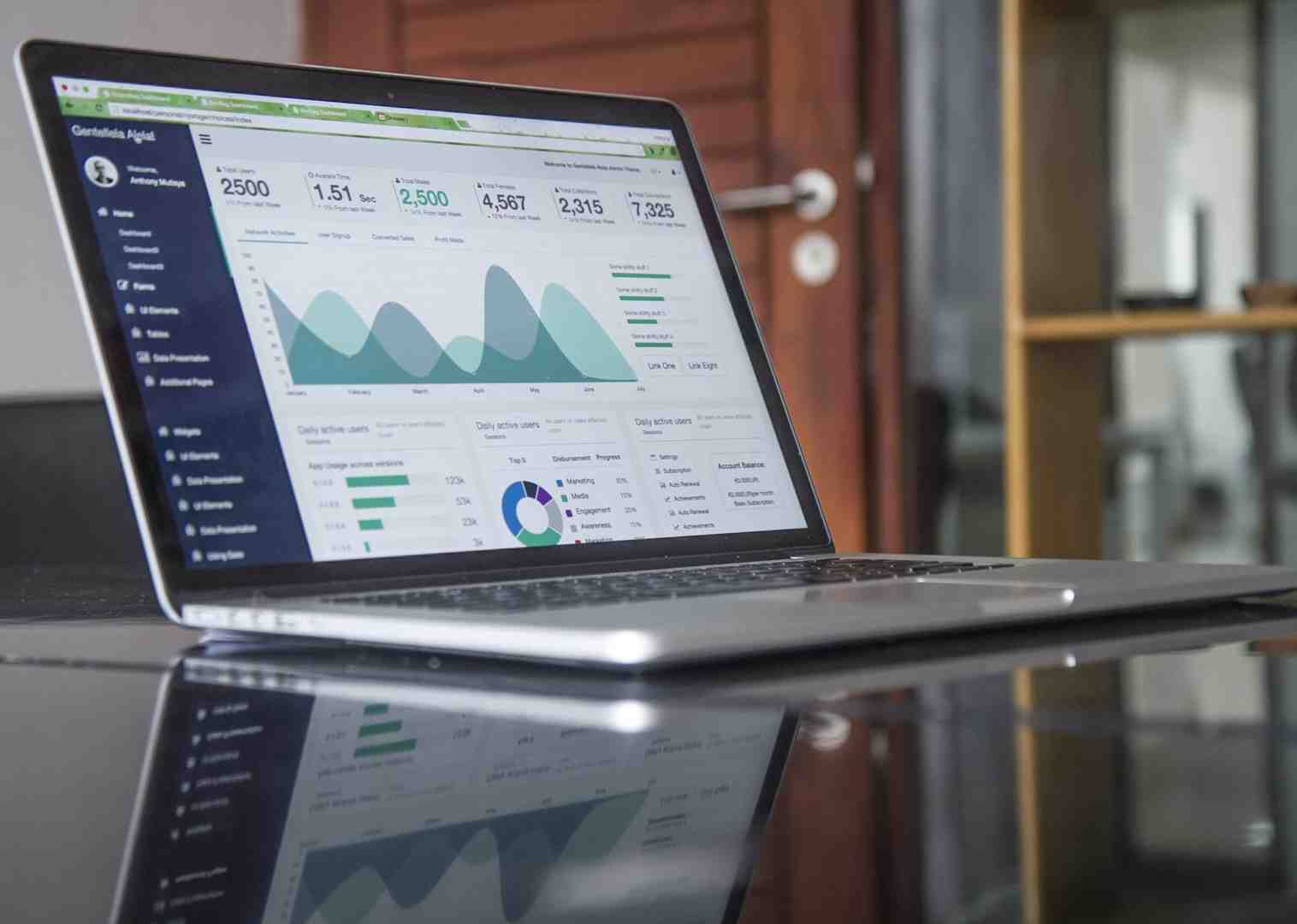
Modern bookkeeping services combine cloud-based software with professional expertise to automate routine financial tasks, provide real-time access to your data, and deliver strategic insights that help your business grow. Unlike traditional bookkeeping that relies on manual data entry and delayed reports, modern services offer:
- Cloud-based platforms (QuickBooks Online, Xero) for 24/7 access from anywhere
- Automated bank reconciliations and transaction categorization to save time
- Real-time financial reporting for faster, smarter business decisions
- Virtual collaboration with bookkeepers and tax professionals
- Scalable pricing models (typically $200-$2,500/month based on complexity)
- Improved security through encryption and secure cloud servers
Throughout my career working with entrepreneurs and small businesses, I've learned the headaches that bookkeeping causes for most. The shift from cluttered paper ledgers and endless Excel sheets to streamlined digital workflows isn't just about convenience—it's about changing your financial data into a competitive advantage.
The role of bookkeepers has fundamentally changed. Today's professionals don't just record transactions. They help you track key performance indicators, forecast cash flow, and identify opportunities to reduce costs or increase revenue. By automating routine tasks such as data entry and bank reconciliations, bookkeepers can save time and reduce errors, freeing them to focus on strategic analysis.
For small to medium-sized businesses, this evolution means you no longer need to choose between affordable bookkeeping and valuable financial insights. Modern services deliver both. Whether you're a startup preparing for your first investor conversation or an established business tired of staff turnover and training costs, the right modern bookkeeping partner can help you build systems that scale with your needs.
The best results happen when a business implements a bookkeeping strategy over time or builds a long-term working relationship with a qualified bookkeeper. This guide will help you understand what modern bookkeeping really means, how it differs from traditional methods, and what to look for when choosing a service provider.
Traditional vs. Modern Bookkeeping: A Fundamental Shift
Remember the good old days? Well, for bookkeeping, those days often involved mountains of paper, endless ledgers, and the occasional ink stain. But just as technology has reshaped nearly every aspect of our lives, it has profoundly transformed how we manage our finances. The evolution from traditional to modern bookkeeping services marks a fundamental shift from reactive record-keeping to proactive financial partnership.
The Old Way: A Look at Traditional Methods
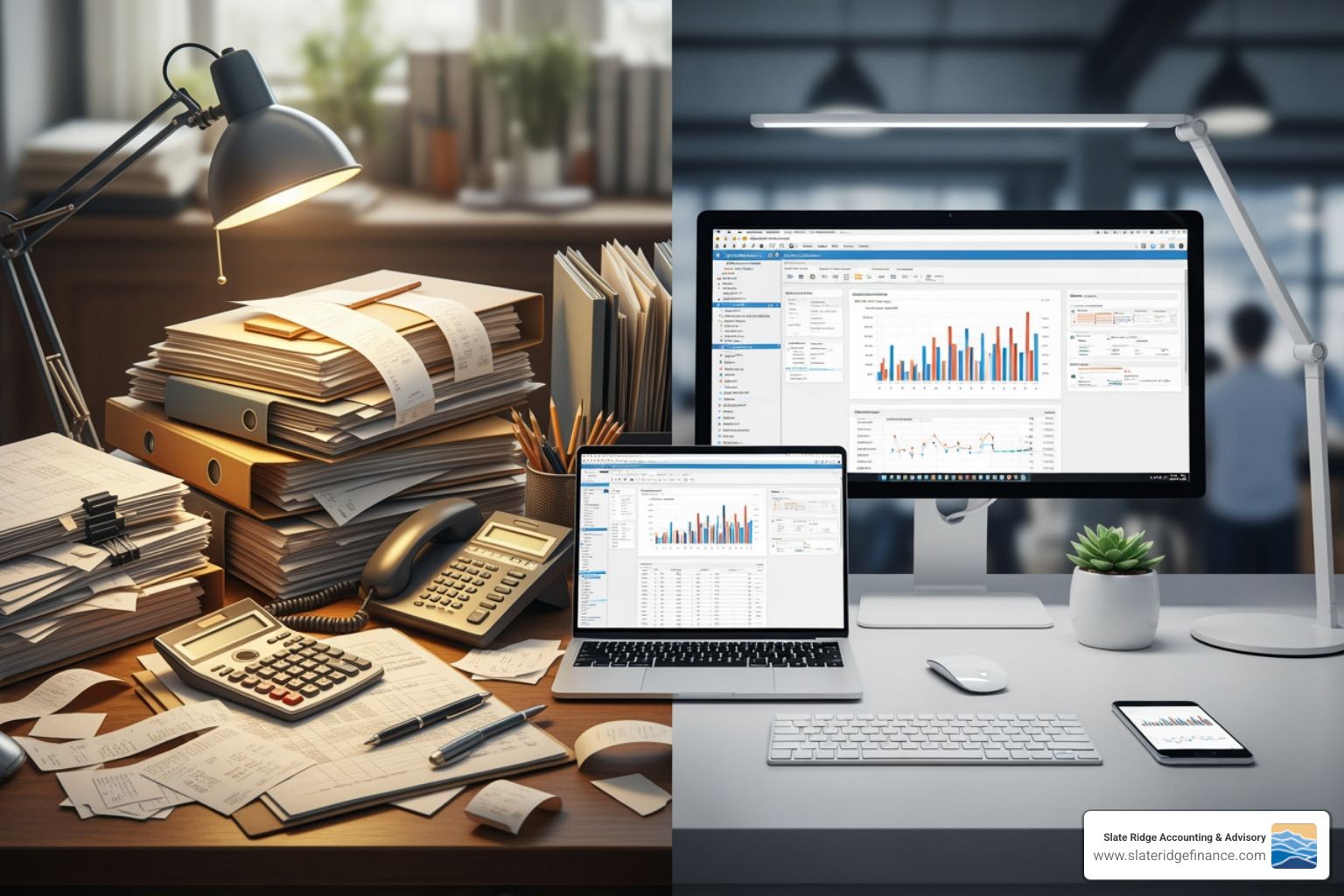
In the past, bookkeeping was a largely manual, on-site affair. Businesses would typically rely on:
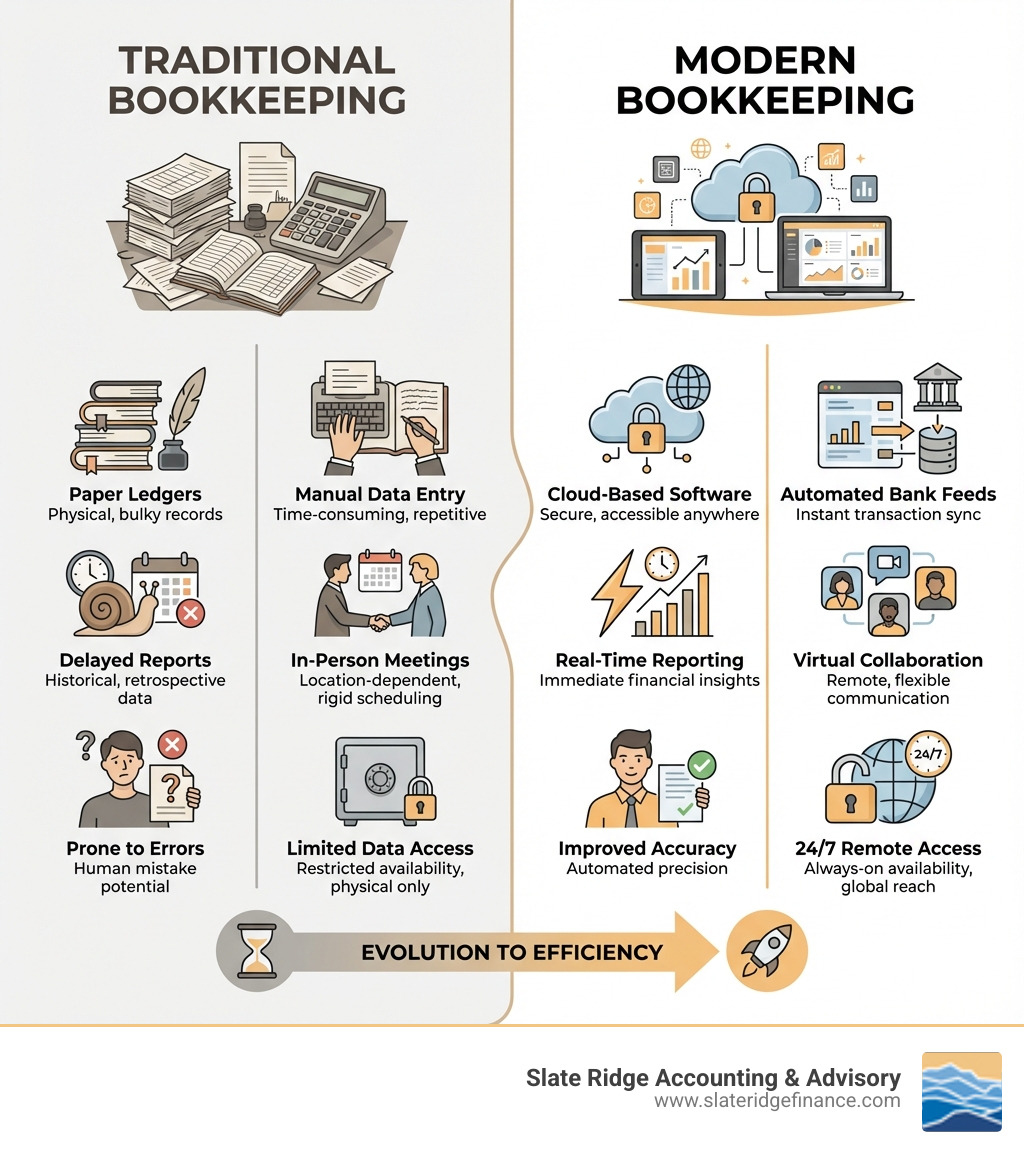
- Paper ledgers: Every transaction was carefully recorded by hand, leaving plenty of room for human error.
- Manual transaction recording: Data entry was a time-consuming, repetitive task, often leading to backlogs.
- Physical receipts: Stacks of receipts and invoices had to be physically delivered to the bookkeeper, making it difficult to keep track of everything.
- In-person meetings: Regular face-to-face meetings were necessary to share information and discuss financial updates, which could be inconvenient and time-consuming.
- Delayed financial reports: Because of the manual process, financial reports were often generated weeks or even months after the fact, providing only a historical, rather than a real-time, view of the business's health.
- Limited access to data: Financial information was often locked away in physical files or desktop software, inaccessible to business owners on the go or when quick decisions were needed.
This traditional approach meant that bookkeeping was often an overlooked back-office task that consumed a business owner's day and made running a successful business harder. It was a transactional process, focused solely on recording what had already happened.
The New Way: Embracing Modern Solutions
Fast forward to today, and modern bookkeeping services have completely revolutionized this landscape. Technology, particularly cloud computing and AI, has transformed traditional bookkeeping into a dynamic, efficient, and insightful process.
- Cloud-based software: Platforms like QuickBooks Online and Xero have become incredibly popular, allowing us to manage your finances from anywhere, at any time. This means 24/7 remote access to your financial data.
- Automated data feeds: Bank reconciliations and transaction categorization are now largely automated, drastically reducing manual data entry and minimizing errors. AI-powered tools can even automate data entry and reconciliation, freeing up valuable time.
- Virtual Accounting: We can perform all bookkeeping tasks remotely, using cloud-based accounting software and other online tools. This means you don't need to worry about hiring and training in-house staff or dealing with turnover.
- Improved accuracy: Automation and smart software significantly reduce the likelihood of human error that plagued traditional methods.
- Proactive financial insights: Instead of just recording transactions, we leverage data analytics to identify trends, forecast cash flow, and help you make informed decisions. This shifts the bookkeeper's role from transactional to strategic, making them a true financial advisor.
- Online Accounting Software Small Business: These sophisticated tools simplify balancing the books, tracking transactions, and generating reports, allowing for real-time data management and remote collaboration.
The 21st-century bookkeeper is no longer just a record-keeper; they are a strategic partner, proficient in cloud-based software, automation, and virtual collaboration tools. This evolution means we can provide businesses in Asheville, Boone, Charlotte, Greensboro, Greenville, Hickory, Morganton, Raleigh, and Wilmington, NC with unparalleled financial clarity and support.
The Core Benefits of Modern Bookkeeping Services for SMBs
For small to medium-sized businesses (SMBs) across North Carolina, embracing modern bookkeeping services isn't just about keeping up with the times—it's about gaining a significant competitive edge. The benefits extend far beyond simply balancing the books; they empower you to make smarter decisions, save precious resources, and scale with confidence.

Time and Cost Savings Through Automation
One of the most compelling advantages of modern bookkeeping is the remarkable efficiency it brings. We know your time is valuable, and every dollar counts for your business in North Carolina.
- Reduced manual data entry: Cloud-based accounting software and integrations mean that many transactions are automatically imported and categorized. This eliminates the tedious and error-prone process of manual input, freeing up hours that can be reinvested into growing your business.
- Automated bank reconciliations: Software can automatically match bank statements with recorded transactions, streamlining a process that once took considerable effort.
- Digital receipt capture: Gone are the days of shoeboxes full of receipts! With digital tools, you can simply scan or email receipts, and they're stored securely in the cloud, ready for categorization.
- Fewer errors: Automation significantly minimizes the risk of human error, leading to more accurate financial records and less stress during tax season.
- Lower overhead vs. in-house staff: Outsourcing your bookkeeping to a modern service provider can be significantly more cost-effective than hiring, training, and retaining a full-time bookkeeper. This is especially true for our North Carolina businesses, where the cost of a professional bookkeeper can range from $30-$90 per hour, or typically $200-$2,500 per month for comprehensive services, depending on the volume and complexity of your transactions. Our Virtual Bookkeeper Cost solutions are designed to be efficient and affordable.
This efficiency translates directly into cost savings, making modern bookkeeping services a smart investment for your business.
Real-Time Access and Improved Collaboration
Imagine having your financial data at your fingertips, anytime, anywhere. That's the power of cloud-based bookkeeping.
- 24/7 access to financial data: Whether you're in Asheville, Raleigh, or traveling for business, you can access your financial reports and dashboards from any device with an internet connection. This real-time access means no more waiting for quarterly reports to understand your business's health.
- Remote collaboration: Our team can work seamlessly with you and your staff, even if we're in different locations across North Carolina. Communication happens efficiently via email, phone, or video conferencing, eliminating the need for in-person meetings.
- Seamless sharing with accountants: We can easily share access to your financial records with your tax accountant or other financial advisors, ensuring everyone is working with the most up-to-date information. This facilitates a smooth tax season, minus the stress.
- Improved team communication: Centralized cloud platforms allow for better communication and data sharing across your entire team.
- Centralized document storage: All your financial documents are stored securely in one place, making them easy to retrieve and audit.
Our Cloud Accounting Services are built on this principle of accessibility and collaboration, ensuring you always have clear visibility into your financial picture.
From Data Entry to Data-Driven Decisions
Beyond saving time and money, modern bookkeeping services truly shine in their ability to transform raw financial data into actionable business intelligence. We don't just process numbers; we help you understand what they mean for your business.
- Custom financial reports: We can generate custom reports that provide insights specific to your industry and business goals, rather than generic templates.
- Key Performance Indicator (KPI) tracking: We help you identify and track the most important metrics for your business, allowing you to monitor progress towards your objectives.
- Cash flow forecasting: By analyzing historical data and current trends, we can help you anticipate future cash inflows and outflows, enabling better planning and preventing cash flow crises.
- Budgeting analysis: We work with you to create realistic budgets and then analyze your actual performance against them, helping you identify areas for improvement.
- Strategic business insights: Our role has evolved from merely recording transactions to providing valuable insights. We can help you spot trends, identify cost-reduction opportunities, and make data-informed decisions that guide your future moves to remain profitable.
- Growth planning: With clear, real-time financial data, you can confidently plan for expansion, new investments, or other growth strategies for your North Carolina business.
We are committed to providing personalized, industry-custom financial solutions that empower businesses in Asheville, Boone, Charlotte, Greensboro, Greenville, Hickory, Morganton, Raleigh, and Wilmington, NC to track KPIs and forecast growth effectively. When your books are clean and current, you're not just organized; you're prepared for anything.
How to Choose the Right Modern Bookkeeping Service
Choosing the right modern bookkeeping service for your business in North Carolina is a critical decision. It's not just about finding someone to handle your numbers; it's about finding a strategic partner who understands your unique needs and can help you achieve your financial goals.
Understanding Pricing Models
When budgeting for bookkeeping services, you'll generally encounter two primary pricing models: hourly rates and flat-fee packages.
Flat-Fee vs. Hourly Pricing Models
| Feature | Flat-Fee Packages | Hourly Rates |
|---|---|---|
| Description | A fixed monthly or annual fee for a defined set of services. | You pay for the actual time spent by the bookkeeper. |
| Predictability | High – you know exactly what you'll pay each month. | Low – costs can fluctuate based on transaction volume. |
| Budgeting | Easier to budget and forecast expenses. | More challenging to budget accurately. |
| Incentive | Provider is incentivized to be efficient. | Client might hesitate to ask questions due to cost. |
| Best For | Businesses with consistent transaction volumes and needs. | Businesses with highly variable or unpredictable needs. |
| Pros | Clear pricing, peace of mind, encourages efficiency. | Pay only for what you use, good for very small businesses. |
| Cons | May pay for unused services if needs decrease, less flexible. | Unpredictable costs, can be more expensive for high volume. |
While professional bookkeepers may charge $30-$90 per hour, generally, you can expect to pay between $200 and $2,500 per month for comprehensive business bookkeeping services, depending on the volume of transactions and the overall complexity of your financials. Our Monthly Bookkeeping Packages Ultimate Guide can help you explore options custom to your business. We believe in transparency and value-based pricing, ensuring you get the most out of your investment.
Key Questions to Ask a Potential Provider
To ensure you select the best partner for your North Carolina business, we recommend asking these crucial questions:
- What software do you use? Ensure they use industry-standard, cloud-based platforms like QuickBooks Online or Xero, which offer flexibility and integration capabilities. We are certified QuickBooks Online ProAdvisors.
- How do you ensure data security? Inquire about their cybersecurity measures, encryption protocols, and data backup procedures for cloud-based services.
- What is your experience in my industry? A provider with experience in your specific industry (e.g., service-based businesses) will better understand your unique financial challenges and opportunities. Our expertise is in providing industry-custom financial solutions.
- How do you help with financial analysis and reporting? Beyond basic record-keeping, ask how they provide insights, track KPIs, and assist with forecasting and strategic decision-making. We specialize in helping businesses track KPIs and forecast growth.
- What are your communication protocols? Understand how often you'll communicate, what methods they use, and if you'll have a dedicated point of contact. The best results happen when a business builds a long-term working relationship with a qualified bookkeeper.
- What are the essential skills and qualifications for a modern bookkeeper on your team? Look for bookkeepers who possess strong analytical skills, proficiency in various cloud-based software, excellent communication, and a commitment to continuous professional development. They should be adaptable and able to offer a wide range of services.
For a comprehensive approach to finding your ideal partner, refer to our Best Accounting Services Small Biz Guide.
Ensuring Compliance and Security
The security of your financial data is paramount. Modern bookkeeping services must prioritize robust measures to protect your sensitive information and ensure regulatory compliance.
- Data encryption: Reputable cloud-based services use advanced encryption methods to protect your data both in transit and at rest.
- Secure cloud servers: We partner with platforms that use highly secure data centers with physical and digital safeguards.
- Role-based access controls: Access to your financial data should be strictly controlled, with different team members having access only to what they need to perform their duties.
- Regular backups: Your data should be regularly backed up to prevent loss in the event of unforeseen circumstances.
- Adherence to financial regulations and standards: We ensure that your financial records comply with relevant accounting standards, such as Generally Accepted Accounting Principles (GAAP) and, for international operations, [International Financial Reporting Standards](https://www.cfainstitute.org/en/advocacy/issues/international-finance-reporting-stds#:~:text=International%20Financial%20Reporting%20Standards%20(IFRS,Accounting%20Standards%20Board%20(IASB).) (IFRS). This is crucial for accurate reporting and decision-making.
- Tax regulation compliance: Keeping up-to-date with federal and North Carolina state tax laws and regulations is a core responsibility, ensuring your business remains compliant and avoids penalties.
Our commitment to these security and compliance measures ensures that your financial data is always safe, accurate, and ready for audits or tax filings. We also facilitate seamless collaboration between your business and your accountants or tax professionals, providing them with secure, real-time access to the necessary data.
Frequently Asked Questions about Modern Bookkeeping
What is the difference between a modern bookkeeper and an accountant?
This is a common question, and understanding the distinction is key to building your financial dream team.
A modern bookkeeper focuses primarily on the day-to-day recording of financial transactions. Their role includes:
- Categorizing income and expenses.
- Reconciling bank and credit card statements.
- Managing accounts payable and receivable.
- Preparing financial statements like profit and loss reports and balance sheets.
- Ensuring the accuracy and completeness of your financial records.
Think of us as the meticulous record-keepers and data managers, providing the foundation for all financial analysis. The 21st-century bookkeeper has evolved to also offer strategic insights from this data, making them a more proactive partner. Our Modern Accounting Practices are a testament to this evolution.
An accountant, on the other hand, takes that carefully prepared data and performs higher-level analysis, interpretation, and strategic planning. Their responsibilities typically include:
- Preparing and filing tax returns.
- Providing tax planning advice.
- Conducting financial audits.
- Offering strategic business advice based on financial performance.
- Ensuring compliance with complex financial regulations.
While there's some overlap, especially with modern bookkeepers offering more advisory services, the core difference lies in the scope: bookkeepers record and organize, while accountants analyze, interpret, and strategize from that organized data. We work closely with your accountant to ensure a seamless financial process.
Is virtual bookkeeping secure for my business?
Yes, absolutely! Virtual bookkeeping, when handled by a reputable provider like us, is highly secure—often more secure than traditional paper-based or local desktop systems. Here's why:
- Cybersecurity measures: We use industry-leading cloud accounting software (like QuickBooks Online and Xero) that employs robust security protocols, including multi-factor authentication, firewalls, and intrusion detection systems.
- Cloud security protocols: These platforms are built with enterprise-level security, often exceeding what most small businesses could implement on their own. Data is encrypted both in transit (when it's being sent) and at rest (when it's stored on servers).
- Data encryption: All sensitive financial information is encrypted, making it unreadable to unauthorized parties.
- Reputable software: We only work with trusted, established software providers known for their strong security track record.
- Service provider responsibility: We take our responsibility to protect your data very seriously. Our team adheres to strict confidentiality agreements and best practices for data handling. We also maintain regular backups of your financial data, ensuring it's always recoverable.
You can rest assured that your financial data is protected with the same, if not greater, level of security than many traditional methods.
Can I switch to a modern service if my books are a mess?
Yes, you most certainly can, and we specialize in helping businesses just like yours get back on track! It's a common scenario for businesses, especially those that have been managing their books manually or have fallen behind.
We offer financial clean-up services and catch-up bookkeeping specifically designed for these situations. Our process typically involves:
- Historical data organization: We'll review your past financial records, bank statements, and receipts, no matter how disorganized they might seem.
- Categorization and reconciliation: We carefully categorize past transactions and reconcile all accounts to ensure accuracy.
- Onboarding process: We have a streamlined onboarding process to gather all necessary information and set up your new cloud-based system efficiently.
- Establishing a clean slate: Our goal is to bring your books completely up-to-date and accurate, providing you with a clean, clear financial picture moving forward.
Don't let past financial disarray prevent you from experiencing the benefits of modern bookkeeping services. We are here to help you establish a solid financial foundation so you can focus on what you do best: running your business in North Carolina.
Conclusion: Partnering for Future Growth
Embracing modern bookkeeping services is more than just an operational upgrade; it's a strategic investment in the future of your business. By using the power of cloud technology, automation, and expert financial insights, you gain unparalleled financial clarity, enabling you to make informed decisions that drive sustainable growth.
The 21st-century bookkeeper is your proactive partner, changing raw data into actionable intelligence. We understand the unique challenges and opportunities facing small businesses in Asheville, Boone, Charlotte, Greensboro, Greenville, Hickory, Morganton, Raleigh, and Wilmington, NC. At Slate Ridge Accounting & Advisory, we pride ourselves on providing modern, personalized, and industry-custom financial solutions that help you track KPIs, forecast growth, and ultimately, achieve your business aspirations.
It's time to move beyond the ledger and take control of your finances with confidence.
Get started with expert virtual accounting today and let us help you write your next chapter of success.
Ready to get started?
Book a free consultation today and let’s explore how Slate Ridge can support your business with expert accounting that’s accurate, timely, and built around your goals.
You Might Also Like
A few more posts we think you’ll enjoy on topics that matter to business owners like you.