

Why Finding the Right Accountant Close to Me Matters for Your Business

If you're searching for an accountant close to me, you're likely overwhelmed by messy books, looming tax deadlines, or the nagging feeling that you're missing deductions. Here's how to quickly connect with the right professional:
Quick Ways to Find a Local Accountant:
- Search online directories - Use the IRS tax preparer directory or QuickBooks ProAdvisor finder
- Ask for referrals - Check with your bank, local business groups, or fellow business owners
- Verify credentials - Use CPA Verify to confirm licenses and check for professional liability insurance
- Match to your needs - Look for industry specialization and the specific services you need (bookkeeping, tax prep, strategic planning)
Running a small business means wearing a hundred hats. You're the CEO, the marketer, the customer service rep, and somehow you're also supposed to be the accountant. But here's the truth: you shouldn't have to be.
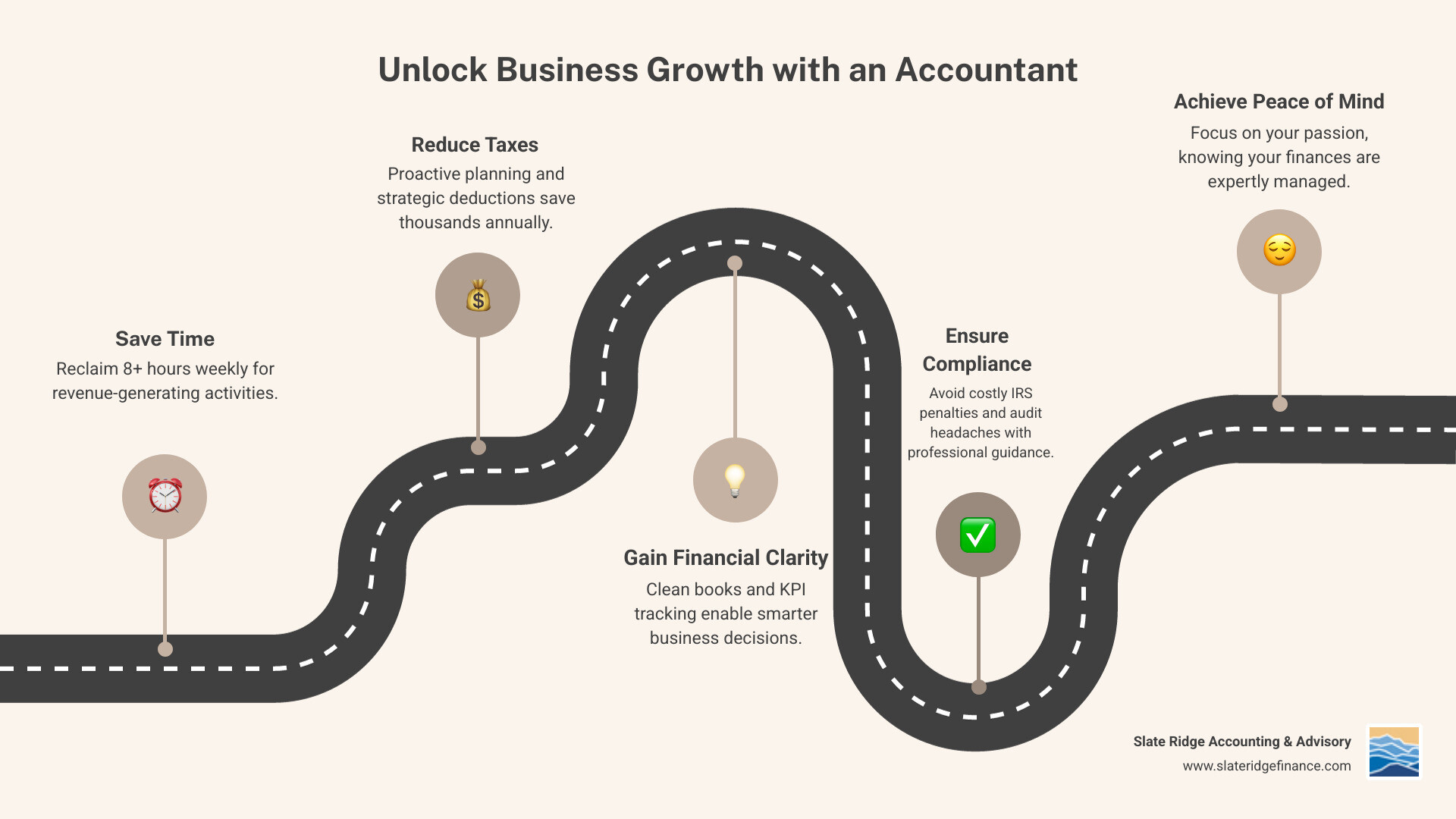
Professional accounting help isn't just about keeping the IRS happy. It's about getting back hours of your week, making smarter financial decisions, and actually sleeping at night knowing your books are in order.
The challenge? Finding someone you can trust with your financial data who actually understands your business. Someone local enough to meet face-to-face when needed, but modern enough to work efficiently in today's digital world.
Basic tax return preparation costs between $150-$500, while full-service accounting can run $1,000-$5,000 annually. That might sound like a lot, but consider the time you'll save, the deductions you'll catch, and the costly mistakes you'll avoid.
This guide answers every question you have about finding, vetting, and working with accounting professionals near you. We'll break down the difference between CPAs, bookkeepers, and tax preparers. We'll show you exactly what to ask before you hire. And we'll help you figure out whether you need a traditional local accountant or if a modern virtual solution might serve you better.
Accountant close to me basics:
How to Find the Right Accountant Close to Me
Finding the perfect financial partner, whether it's an accountant close to me or a virtual expert, can feel like a quest. But with the right approach, you can narrow down the options and find someone who truly fits your business. We'll explore various search methods, from online directories to professional associations, and even the power of a good old-fashioned referral.

Where to Start Your Search for an Accountant Close to Me
When you're looking for an accountant close to me, starting your search can take many forms. We recommend casting a wide net initially, especially if you're in one of our beautiful North Carolina locations like Asheville, Charlotte, Raleigh, or Greensboro.
- Local Business Groups: Your local chamber of commerce or industry-specific business associations in North Carolina cities are fantastic resources. They often have directories or can provide recommendations for accountants who work with businesses just like yours. A fellow business owner's endorsement is often gold!
- Bank Recommendations: If you have a strong relationship with your business bank, they might be able to recommend accounting professionals they've worked with or whose clients they serve.
- Online Search: Of course, a simple online search for "accountant close to me" in your specific North Carolina city (e.g., "accountant Charlotte NC" or "accountant Wilmington NC") is a natural starting point. However, be prepared to dig a little deeper than just the first few results.
- IRS Directory: The IRS provides a valuable tool for finding tax preparers near you, including CPAs. You can check out the IRS’ tax preparer directory to filter by location and credential.
- Professional Associations: Organizations like the North Carolina Association of Certified Public Accountants (NCACPA) can offer directories of licensed professionals.
- QuickBooks ProAdvisor Search: If you're a QuickBooks user, Intuit's Find a ProAdvisor tool is excellent. You can filter by industry, services, and location, helping you find a QuickBooks-certified professional.
- Consider Virtual Options: Don't limit yourself to just brick-and-mortar offices. Cloud-based firms like ours offer seamless virtual accounting solutions. You can always check our Slate Ridge Accounting & Advisory Contact Page to see how we can serve your needs remotely. For those looking specifically for daily transaction help, our guide on Bookkeeper Near Me might be helpful.
Key Questions to Ask Before You Hire
Once you have a few potential accountants in mind, it's time for the interview process. Think of it as hiring a crucial member of your team – because that's exactly what they'll be! Here are some essential questions we recommend asking:
- "What is your experience working with small businesses, particularly those in my industry?" Look for someone who understands the unique challenges and opportunities of your sector. For example, if you run a restaurant in Asheville or a construction company in Raleigh, specific industry knowledge can be invaluable.
- "How do you structure your fees?" This is vital for budgeting. Accountants might charge hourly, a flat fee per service, or offer monthly packages. Basic monthly accounting services can range from $75 to $500 or more, while individual tax preparation averages $242. Make sure you understand what's included.
- "What is your typical communication style and how often can I expect to hear from you?" Do they prefer email, phone calls, or video meetings? How quickly do they respond? Consistent and clear communication is key to a healthy client-accountant relationship.
- "What accounting software do you primarily use, and are you proficient in QuickBooks?" If you already use QuickBooks, finding a ProAdvisor can streamline your processes.
- "Can you provide references from other small business clients?" Hearing directly from current clients can give you insight into their working style and client satisfaction.
- "How do you stay updated on tax laws and accounting regulations, especially those relevant to North Carolina?" The financial world is constantly changing, and you want an accountant who is always ahead of the curve.
For more guidance on selecting the right professional, check out our Best Accounting Services Small Biz Guide.
How to Verify Credentials and Legitimacy
Before entrusting anyone with your sensitive financial information, verifying their credentials is non-negotiable. It's like checking a contractor's license before they remodel your home – you want to ensure they're qualified and legitimate.
- Preparer Tax Identification Number (PTIN): Anyone who prepares taxes for compensation is required by the IRS to have a PTIN. You can confirm this through the IRS’ tax preparer directory. It's the bare minimum.
- State Board of Accountancy Check: For CPAs, verify their license and standing with your state's Board of Accountancy. For North Carolina, this would be the NC State Board of Certified Public Accountant Examiners. This ensures they are licensed to practice in our state and have a clean record.
- CPA Verify Tool: The National Association of State Boards of Accountancy offers a CPA Verify tool that can give you a quick overview of a CPA's licensing status.
- Professional Liability Insurance: Ask if the accountant or their firm carries professional liability insurance. This protects both you and them in case of errors or omissions. While not always legally required, it's a sign of a responsible professional.
Understanding these steps is crucial for protecting your business. The IRS provides further guidance on Understanding Tax Return Preparer Credentials and Qualifications.
Finding an Accountant Who Knows Your Industry
Just as a specialist doctor understands your specific ailment better than a general practitioner, an accountant with industry-specific knowledge can be a game-changer for your business. Why? Because every industry has its own quirks, tax benefits, and compliance challenges.
For instance, a real estate investor in Wilmington, a medical practice in Morganton, or a restaurant owner in Boone will have vastly different accounting needs. An accountant specializing in your industry will already be familiar with:
- Common deductions and credits specific to your field.
- Industry benchmarks and key performance indicators (KPIs).
- Specific compliance requirements and regulations.
- Software and systems commonly used in your industry.
Don't hesitate to ask potential accountants about their experience with businesses similar to yours. Inquire about industry-specific tax strategies they've implemented or financial advice they've given clients in your sector. This specialized insight can lead to significant tax savings and more effective financial management.
Decoding the World of Accounting Professionals

What Services Do Local Accountants Offer Small Businesses?
When you seek an accountant close to me, you're often looking for a suite of services designed to keep your business financially healthy and compliant. A comprehensive local accountant or accounting firm typically offers:
- Bookkeeping: This is the foundation – recording daily financial transactions, categorizing expenses, and reconciling bank accounts. Clean bookkeeping ensures accurate financial reporting.
- Financial Statement Preparation: Generating essential reports like profit & loss statements, balance sheets, and cash flow statements, which are vital for understanding your business's performance and making informed decisions.
- Tax Planning and Preparation: This goes beyond simply filing your annual taxes. It involves year-round strategy to minimize your tax liability, identify deductions and credits, and ensure compliance with federal and North Carolina state tax laws. This can include preparing federal and state tax returns (e.g., for Charlotte, Raleigh, or Greenville businesses).
- Payroll Processing: Managing employee wages, deductions, tax withholdings, and ensuring timely payment and compliance with payroll tax regulations.
- Business Advisory: Offering insights into your financial data to help you make strategic decisions. This can include cost control, cash flow management, profitability analysis, and even guidance on growth forecasting.
- Cash Flow Management: Helping you understand where your money is coming from and where it's going, optimizing your working capital to keep your business afloat and thriving.
These services are fundamental to small business success. For a deeper dive into how these services can benefit your operations, explore our page on Accounting and Payroll Services for Small Business.
CPA vs. Bookkeeper vs. Enrolled Agent: What's the Difference?
Navigating the various titles in the accounting world can be confusing. Let's break down the primary distinctions between a Certified Public Accountant (CPA), a bookkeeper, and an Enrolled Agent (EA).
| Professional Type | Qualifications | Primary Services | IRS Representation Rights |
|---|---|---|---|
| Bookkeeper | No formal licensing required, but certifications (e.g., AIPB, NACPB) are common. | Daily financial transactions, bank reconciliation, payroll, generating basic financial reports. | Limited to no representation rights. Can assist clients but cannot represent them before the IRS. |
| Enrolled Agent (EA) | Must pass a comprehensive IRS exam or have qualifying experience as a former IRS employee. | Tax preparation, tax planning, and tax-related advice. | Unlimited representation rights before the IRS. |
| Certified Public Accountant (CPA) | Must pass the Uniform CPA Exam, meet state-specific education and experience requirements, and be licensed by their state's Board of Accountancy. | Wide range of services including bookkeeping, tax preparation, auditing, financial planning, and business consulting. | Unlimited representation rights before the IRS. |
For more on day-to-day financial management, see our guide on finding a Bookkeeper Near Me.
When Might a Small Business Need a CPA Versus a Bookkeeper?
Your needs will dictate whether a bookkeeper or a CPA is the right fit. Generally, you'll need a bookkeeper for day-to-day tasks like recording transactions, handling payroll, and reconciling bank accounts to produce basic financial reports. You should seek a CPA for more complex situations, such as undergoing an audit, navigating intricate tax laws, seeking investment capital or loans, and for high-level strategic growth planning.
Tax Preparer, Tax Advisor, and CPA Explained
A Tax Preparer is anyone who prepares tax returns for compensation and must have a Preparer Tax Identification Number (PTIN). A Tax Advisor focuses more on strategic planning to minimize your tax burden throughout the year. A CPA is a state-licensed professional who can perform all of these roles, including tax preparation and strategic advice, and also has unlimited rights to represent clients before the IRS.
Ready to get started?
Book a free consultation today and let’s explore how Slate Ridge can support your business with expert accounting that’s accurate, timely, and built around your goals.
You Might Also Like
A few more posts we think you’ll enjoy on topics that matter to business owners like you.