

Why Financial Clarity Matters for Mission-Driven Organizations
Cloud accounting software for human services organizations is specialized financial technology designed to handle the unique complexities these entities face. It helps manage restricted grants, multiple funding streams, donor transparency, and regulatory compliance, all accessible from anywhere with an internet connection.
Quick Answer: Top Cloud Accounting Solutions for Human Services Organizations
The best cloud accounting software for HSOs should include:
- True fund accounting with multi-dimensional tracking
- Grant management tools for restrictions and reporting
- Automated compliance reporting (FASB, GAAP standards)
- Real-time dashboards for program and donor visibility
- Integration capabilities with CRM and fundraising platforms
- Secure, role-based access for staff and stakeholders
Leading options include Sage Intacct, AccuFund Anywhere Online, Aplos, and MYOB Acumatica, each offering specialized nonprofit features.
Human services organizations work to strengthen communities, but behind every success story is a mountain of financial complexity. Funding arrives from dozens of grants with strict restrictions, donors demand transparency, and regulators require specific reporting formats. These tasks often fall to small finance teams wearing multiple hats.
As one CFO from Room to Read noted when evaluating systems: "We needed software that was intuitive, dynamic, and flexible enough to capture all our operational complexities."
The old way—spreadsheets, desktop software, and disconnected systems—is inefficient and holds organizations back. Time spent wrestling with manual accounting is time taken away from advancing your mission.
This guide walks you through what to look for in cloud accounting software built for human services organizations. You'll learn what features matter most, how to evaluate options, and why the right technology can transform your financial operations.
Cloud accounting software for human services organizations vocab to learn:
Why Human Services Organizations Face Unique Accounting Problems
Human services organizations (HSOs) operate in a financial landscape distinct from for-profit businesses. Success is measured by community impact, not profit margins, creating unique accounting challenges that generic business tools cannot address.
HSOs in communities like Asheville, Raleigh, and Charlotte focus on wisely managing funds to achieve mission objectives. We rely on a diverse mix of funding sources—donations, grants, and contributions—each with specific restrictions. For example, a state grant for a specific project cannot be mixed with general donations. Every dollar must be traceable to its source and intended use, which is crucial for donor transparency and regulatory compliance. HSOs need adaptable tools to manage these complex financial dynamics effectively.

The Core Accounting Challenges for HSOs
The specific financial environment of HSOs presents several core challenges that require mission-specific solutions.
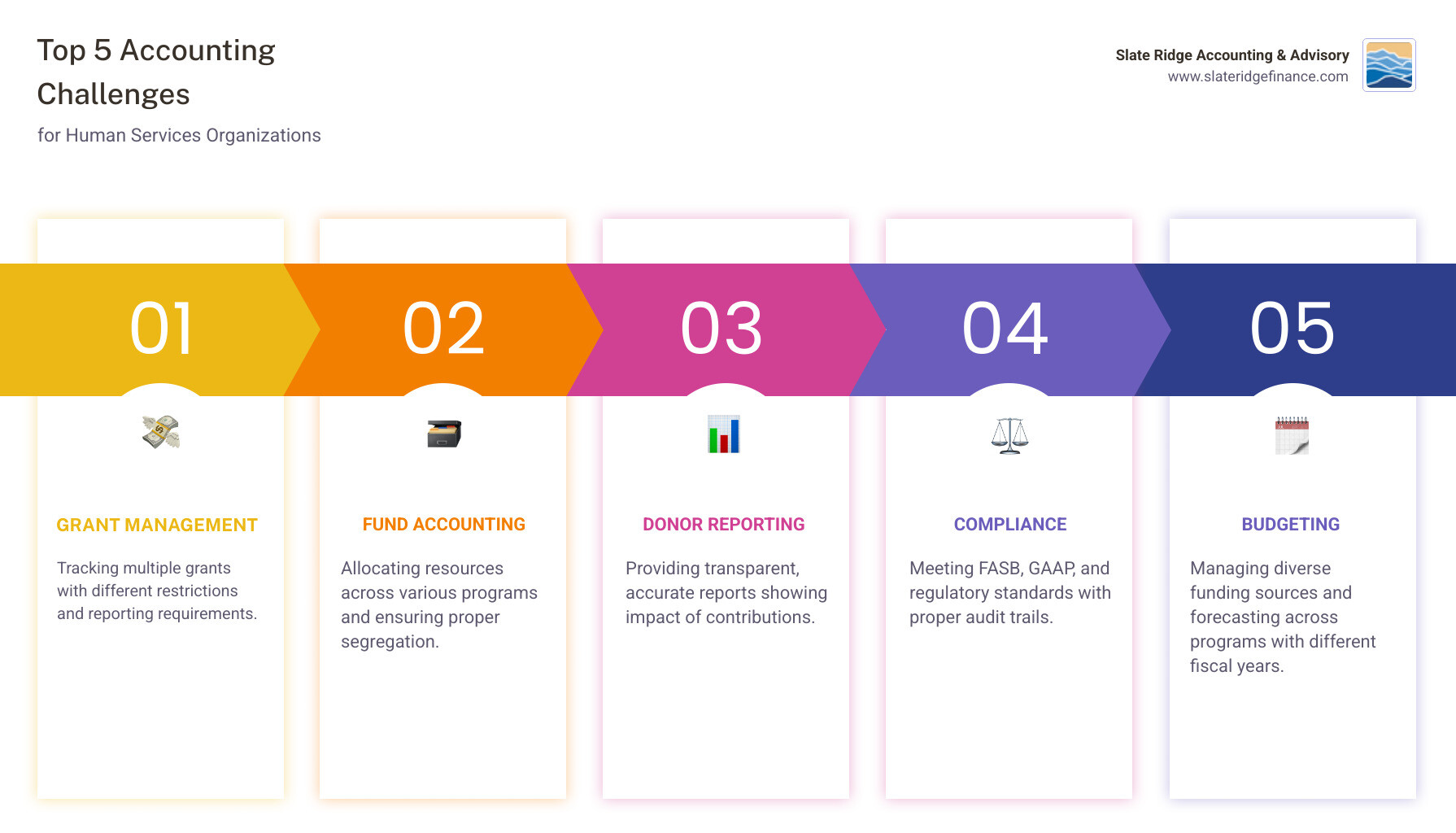
- Diverse Funding and Grant Restrictions: HSOs often juggle dozens of grants and donations, each with strict regulations on how funds can be spent. This requires precise tracking to associate every expense with the correct funding source.
- Program-Based Budgeting: Budgets are often broken down by program or project. Funds must be allocated accurately across various initiatives, with expenditures monitored against specific program budgets to track financial health.
- Demonstrating Impact and Stakeholder Reporting: Donors and funders want to see the tangible impact of their contributions. Accounting systems must link financial data with program results to generate clear reports showing how funds were used.
- Compliance and Regulatory Demands: HSOs must adhere to complex regulations from bodies like the Financial Accounting Standards Board (FASB). Nonprofit accounting standards differ significantly from for-profit rules, making compliance-ready features essential for audits.
- Limited Resources: Many HSOs operate with lean teams. Manual accounting tasks consume valuable time that could be better spent on mission-critical activities. Automation helps teams "do more with less." Seeking Expert Financial Advice can guide these technology decisions.
Desktop vs. Cloud: A Critical Choice for Modern HSOs
When choosing accounting software, HSOs face a pivotal decision between traditional desktop software and flexible cloud-based solutions. The choice impacts efficiency, security, and mission fulfillment.
Desktop software is installed on a local computer, restricting access and making remote collaboration difficult. It requires manual updates, significant upfront costs for licenses and hardware, and places the full burden of security and backups on the organization.
Cloud-based software operates online, allowing secure access from any device with an internet connection. This is a game-changer for teams spread across North Carolina. It uses a subscription (SaaS) model with lower upfront costs, and updates are automatic. Cloud providers invest heavily in enterprise-grade security, offloading that burden from your team. Cloud solutions are also inherently scalable, easily accommodating growth.
Here’s a quick comparison:
| Feature | Desktop-based Software | Cloud-based Software |
|---|---|---|
| Accessibility | Local machine or internal network only | Anywhere with an internet connection |
| Cost | High upfront license fees, hardware costs | Subscription-based (SaaS), lower upfront investment |
| Updates | Manual, often disruptive, requires IT intervention | Automatic, seamless, always up-to-date |
| Security | Managed by organization (backups, patches, firewalls) | Managed by provider (encryption, data centers, certifications) |
| Scalability | Limited by hardware and license capacity, costly upgrades | Flexible, easily scales up or down with organizational needs |
| Collaboration | Difficult for remote or multi-user access | Real-time, multi-user access for improved teamwork |
Core Features of Cloud Accounting Software for Human Services Organizations
To steer the unique financial landscape of HSOs, we need robust features that support our mission, ensure compliance, and provide real-time insights. Cloud accounting software for human services organizations delivers these essential tools.
Essential Functionalities for Financial Integrity and Transparency
Effective HSO financial management requires functionalities that ensure every dollar is tracked and reported transparently.
- True Fund Accounting: This is non-negotiable. Fund accounting allows HSOs to classify and track resources based on restrictions and purpose. It ensures a donation for a specific program in Boone, NC, is used correctly, demonstrating a clear path from donation to impact.
- Multi-Dimensional Chart of Accounts: This system allows you to tag transactions with multiple attributes—such as program, grant, or location. This granular tagging provides deep insight, enabling you to drill down into costs and analyze performance with greater flexibility.
- Budgeting and Forecasting Tools: Cloud software provides tools to set budgets for each program, funder, and campaign, then track actuals against them in real-time. This dynamic capability helps with flexible decision-making and long-term financial planning.
- Real-time Dashboards: See your organization's financial picture at a glance. Real-time dashboards display key performance indicators (KPIs) like cash receipts and grant balances, allowing you to monitor progress and take swift action. Our Financial Reporting Services can help interpret this data.
Streamlining Operations with Automation and Integration
Cloud accounting software automates repetitive tasks and integrates with other essential systems, freeing up valuable time and resources to focus on your mission.
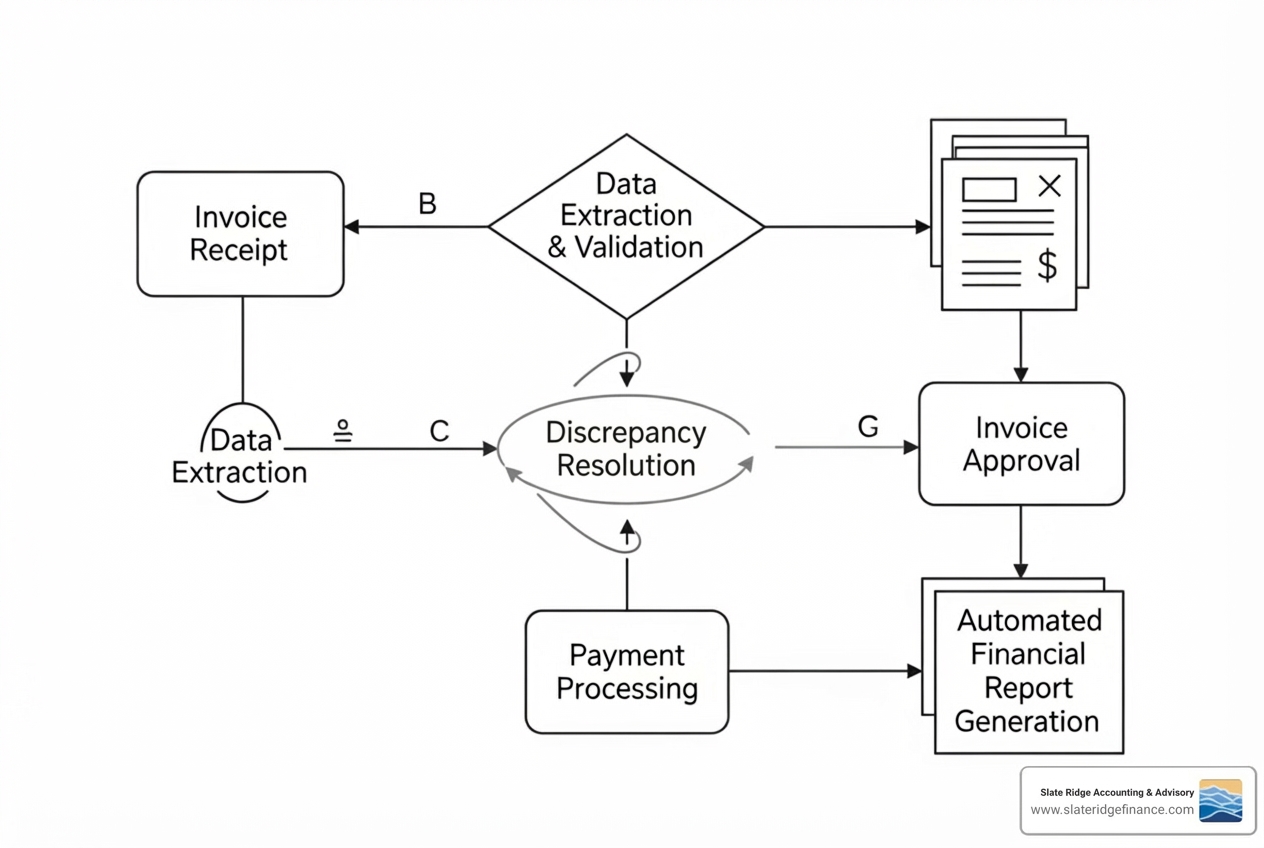
- Automated Workflows (AP/AR): Automate accounts payable and receivable, from invoice processing to payment reminders. This reduces manual errors, improves efficiency, and accelerates cash flow.
- Expense Management: Simplify expense tracking with features like receipt scanning and mileage tracking, making reimbursement processes smoother and more accurate for staff on the go.
- Payroll Integration: Integrate with payroll systems to automate calculations, tax compliance, and timely payments. You can also distribute labor costs across departments for employees working in multiple areas.
- Integration with CRM and Fundraising Platforms: Connect your accounting software with CRM and fundraising platforms to create a unified data ecosystem. This ensures donor activity and accounting records are always in sync, providing a comprehensive view of your constituents. This commitment to Financial Process Optimization is key to success.
The impact of automation is profound. Research shows employees spend more than one day a week on manual tasks that can be automated. Redirecting that time to service delivery is the power of modern cloud software.
Mastering Grant Management and Compliance
Cloud solutions are purpose-built to simplify the complexities of grant management and regulatory compliance.
- Centralized Grant Tracking: Manage multiple grants by centralizing all documents and details. Easily track income, expenditures, and remaining balances for each grant to ensure funds are used appropriately.
- Budget vs. Actual Reporting: Automate the comparison of budgeted amounts against actual spending for every grant and program. Real-time insights into variances allow for timely adjustments and better financial stewardship.
- Automated Compliance Reporting: HSOs must comply with FASB and GASB regulations. Cloud software includes built-in, compliant reporting templates that simplify tax preparation and grant submissions.
- Audit Trail: Cloud software automatically records every transaction, creating a comprehensive, traceable history. This ensures your financial records are always audit-ready, accelerating the audit process. Our Small Business Financial Reporting Complete Guide explains how proper reporting ensures compliance.
The Transformative Benefits of Moving to the Cloud
Adopting cloud accounting software is about changing operations, boosting impact, and securing the future. For HSOs across North Carolina, the benefits extend far beyond the finance department.
Enhancing Collaboration and Donor Trust
Cloud accounting helps HSOs build stronger internal and external relationships through transparency and connection.
- Real-time Data Access and Collaboration: With cloud solutions, program managers in Greensboro, fundraisers in Wilmington, and executives in Raleigh can all view the same up-to-the-minute financial data. This real-time accessibility improves collaboration and decision-making, which is vital for Remote Accounting Solutions.
- Role-Based Permissions: Control who sees what. Robust role-based access ensures sensitive financial data is only visible to authorized personnel, protecting privacy while facilitating information sharing.
- Improved Transparency for Donors: Donors deserve to know how their contributions are used. By connecting every transaction to a specific fund and program, cloud software provides a clear picture of how funds are allocated, which builds trust and strengthens donor relationships.
Achieving Scalability and a Strong ROI
Every dollar saved means more resources for your mission. Cloud accounting delivers a significant return on investment and supports growth.
- Cost Savings on IT Infrastructure: The cloud eliminates the need for expensive on-premise servers and maintenance. A predictable subscription (SaaS) model reduces upfront investment and IT overhead, freeing up funds for mission-critical programs.
- Increased Productivity: By automating repetitive tasks, staff can increase productivity by up to 60%. This allows your team to focus on strategic planning and direct service instead of manual data entry.
- Positive ROI and Rapid Payback: The financial benefits are clear. HSOs can see an average ROI of 250%, with payback often achieved in less than six months. These tangible gains can be reinvested directly into your community.
- Supporting Organizational Growth: Cloud software is inherently scalable. As your mission expands into new locations like Hickory or Morganton, the software grows with you, ensuring your financial systems support your Business Growth Strategies.
How to Choose the Right Software for Your HSO
Selecting the right cloud accounting software for human services organizations is a critical decision. Since it’s not a one-size-fits-all solution, a thoughtful evaluation process is essential.
Key Factors to Consider in your selection of cloud accounting software for human services organizations
When evaluating potential software, consider these crucial factors to ensure it aligns with your needs and goals:
- Feature Set Evaluation: Does the software offer true fund accounting, multi-dimensional reporting, and robust grant management? Create a list of "must-have" features to handle your specific funding, budgeting, and compliance needs.
- Usability and Training Needs: An advanced system is only useful if your team can use it. Look for intuitive interfaces and check what training resources are available. A user-friendly system reduces the learning curve and boosts adoption.
- Affordability and Pricing Models: Assess the total cost of a subscription (SaaS) model, including setup fees and add-ons. Ask about nonprofit discounts and pricing tiers. Our Best Small Business Bookkeeping Packages can offer guidance on managing costs.
- Vendor Customer Support: Prompt and knowledgeable support is invaluable. Evaluate the quality of customer service, available communication channels (phone, chat, email), and peer support forums.
- Scalability: Your accounting software must keep pace with your growth. Choose a solution that can handle increasing transaction volumes, new programs, and more users without a complete overhaul.
- Industry Suitability: Was the software designed for nonprofits? General business solutions often lack the specialized features needed for fund accounting and grant compliance.
Always take advantage of free demos and trials to assess usability and feature fit before making a final decision.
Prioritizing Security and Data Protection
For HSOs, data security is paramount. When adopting cloud accounting software for human services organizations, security cannot be an afterthought.
- Data Encryption and Secure Data Centers: Ensure the provider uses robust data encryption (in transit and at rest) and that their data centers have industry-leading physical and digital security.
- Role-Based Access Controls: This critical feature lets you define precise user permissions, ensuring only authorized personnel can view or edit sensitive financial data.
- Regular Backups and Disaster Recovery: Confirm that your data is backed up regularly and that the provider has a comprehensive disaster recovery plan to restore access quickly after an outage.
- Vendor Certifications and Compliance: Look for providers with independent security certifications, like SOC 1 Type 2. Learn more about SOC certifications to understand the level of scrutiny these audits entail, which provide an auditor's opinion on a provider's controls.
- Continuous Monitoring: A reputable cloud provider will continuously monitor its systems for threats and vulnerabilities.
Understanding these security measures is essential for protecting your organization's data and maintaining trust. The Virtual Bookkeeper Cost is often offset by the improved security and efficiency of cloud solutions.
Frequently Asked Questions about Cloud Accounting for HSOs
Here are answers to common questions from human services organizations exploring a move to the cloud.
How does cloud software help with FASB and GAAP compliance?
Cloud accounting software is a powerful ally for FASB and GAAP compliance. Here's how:
- Built-in Reporting Templates: Many solutions for nonprofits include pre-built, compliant financial reporting templates (e.g., Statement of Financial Position, Statement of Activities).
- Automated Internal Controls: The software automates controls like transaction approvals and flags unusual activity, reducing the risk of errors and fraud.
- Segregation of Duties: Cloud platforms allow you to assign specific roles and permissions to users, ensuring no single individual has complete control over a financial process.
- Clear Audit Trails: Every action is automatically recorded and time-stamped, creating a comprehensive, traceable audit trail that is invaluable during audits.
- Alignment with Nonprofit Standards: Purpose-built cloud accounting software for human services organizations understands the nuances of nonprofit accounting, supporting FASB- and GASB-compliant reports.
Can cloud software integrate with our existing donor management CRM?
Absolutely. Integration is a key strength of cloud accounting software. Modern platforms offer open Application Programming Interfaces (APIs) that allow different systems to share data seamlessly.
- Pre-built Integrations: Many solutions have marketplaces with pre-built connections to common CRM and fundraising tools. The Xero App Store boasts over 1000 third-party apps.
- Unified Data Ecosystem: Integrating your CRM and accounting software creates a unified system. Donor activity flows automatically into your accounting records, eliminating duplicate data entry, reducing errors, and providing a holistic view of your constituents.
- Seamless Connections: This connectivity extends to online giving platforms, event management software, and payroll providers, streamlining operations across your entire organization.
What is the typical ROI for an HSO switching to cloud accounting?
The return on investment (ROI) is significant, extending beyond financial savings to operational efficiency and greater impact.
- Increased Productivity: Automating manual tasks can increase staff productivity by up to 60%, freeing teams to focus on strategic initiatives instead of data entry.
- Lower IT Overhead: A SaaS model eliminates the need for expensive hardware and IT maintenance, reducing operating costs.
- Faster Financial Close: Cloud software streamlines month-end close, consolidations, and allocations, giving you quicker access to financial insights for decision-making.
Studies show a strong positive ROI, with organizations reporting an average ROI of 250% and payback in under six months. This rapid return makes a compelling case for adopting cloud technology to make every dollar count.
Conclusion: Focus on Your Mission, Not Your Manuals
For human services organizations in communities like Charlotte and Greensboro, the mission is everything. However, the financial complexities of managing diverse funding, compliance, and transparency can pull focus away from that core purpose.
This is where cloud accounting software for human services organizations becomes a strategic partner. By leveraging the right technology, HSOs can automate tedious tasks, gain real-time financial insight, and ensure compliance. This frees up valuable resources—time, energy, and funding—to focus on what truly matters: serving the community.
The journey to financial clarity begins with embracing modern solutions. Partnering with a firm that understands both cloud technology and the nonprofit sector is key. At Slate Ridge Accounting & Advisory, we provide Personalized Financial Solutions custom to your mission, helping your organization thrive and expand its impact.
Ready to transform your financial operations and dedicate more resources to your vital work? Explore our Virtual Accounting services today.
Ready to get started?
Book a free consultation today and let’s explore how Slate Ridge can support your business with expert accounting that’s accurate, timely, and built around your goals.
You Might Also Like
A few more posts we think you’ll enjoy on topics that matter to business owners like you.