
Why Financial Clarity is Your Greatest Asset
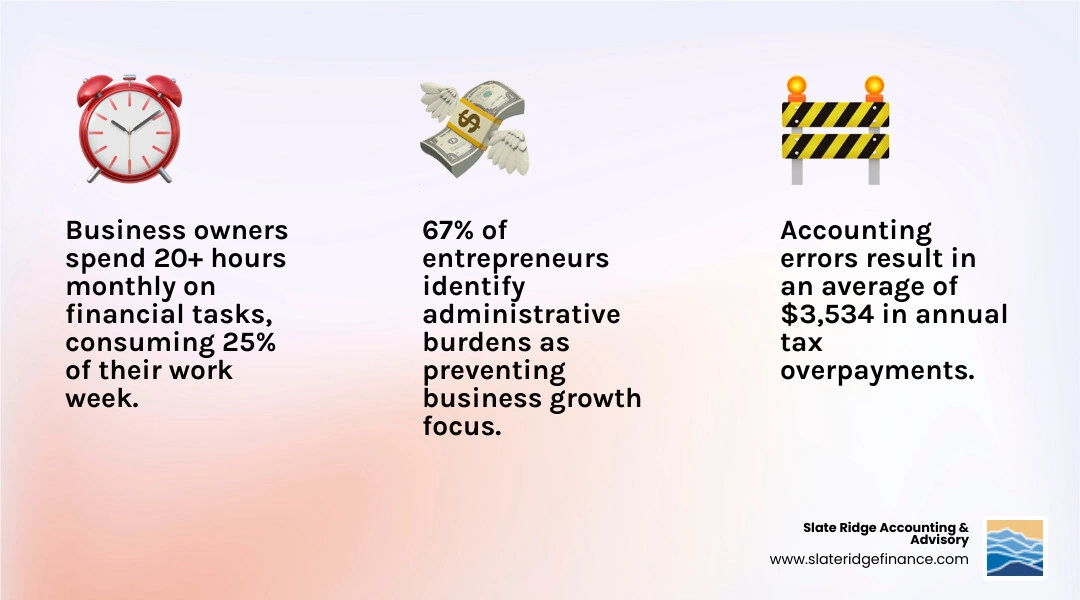
Bookkeeping for entrepreneurs is the foundation of every successful business, yet most business owners feel unprepared for it. Research shows that 60% of small business owners don't feel they have enough knowledge about accounting and finance, and 40% consider themselves financially illiterate.
What you need to know about bookkeeping for entrepreneurs:
- What it is - The day-to-day recording of income and expenses to track your business's financial health
- Why it matters - Cash flow miscalculations contribute to 82% of small business failures
- The hidden cost - Business owners spend 20+ hours monthly on financial tasks, creating significant opportunity costs
- The solution - Choose between DIY software, professional bookkeepers ($30-$90/hour), or outsourced services ($200-$2,500/month)
- The payoff - Companies with professional accounting support grow revenue 28% faster and are twice as likely to secure funding
You didn't start your business to wrestle with spreadsheets. You started it for the freedom to create, build something meaningful, and make your own decisions. But here's the truth: financial clarity isn't just about compliance—it's your greatest strategic asset.
As one entrepreneur put it: "I could have made poor business decisions without accurate numbers." The challenge isn't just finding time for bookkeeping. It's understanding that every hour you spend on financial tasks represents time not spent serving customers, developing products, or growing your business.
For a business owner whose time is valued at $150 per hour, spending 20 hours per month on bookkeeping represents $3,000 monthly or $36,000 annually in opportunity cost. Add accounting errors that result in an average of $3,534 per year in tax overpayments, and the real cost of DIY bookkeeping becomes clear.
This guide will show you how to build a bookkeeping system that works for your business—whether you handle it yourself, use software, or partner with professionals. You'll learn the essential methods, avoid common mistakes, and find how to turn financial data into growth decisions.
Bookkeeping for entrepreneurs word roundup:
The Foundations: Understanding Your Financial Language
As entrepreneurs, we often dive into creating and innovating, but understanding the "language of business"—accounting—is just as crucial. It's the framework that supports all our ventures. Running a business without proper financial understanding is like trying to build a house without reading the blueprints.
Bookkeeping and accounting are often used interchangeably, but they serve distinct, interconnected roles. Bookkeeping for entrepreneurs is the bedrock: the systematic recording of every financial transaction. Think of it as the daily diary of your business's financial life. Without this diligent tracking, spending can get out of control, leading to confusion and lost profit.
Accounting, on the other hand, transforms these records into meaningful reports and strategic plans. It's the analysis and interpretation of bookkeeping data. While bookkeeping is about recording, accounting is about understanding and strategizing to make sense of the numbers, prepare for taxes, and guide business decisions.

This distinction is critical. Even with outsourced accounting, a basic bookkeeping understanding ensures meaningful conversations with investors, lenders, or your team. It influences everything from loan applications and payroll to investor relations and growth projections.
Bookkeeping & Accounting Methods Explained
When we start on the journey of bookkeeping for entrepreneurs, we encounter different methods for recording transactions and recognizing revenue and expenses. Choosing the right method depends on our business's size, complexity, and growth aspirations.
First, let's look at bookkeeping methods:
- Single-Entry Bookkeeping: This is the simplest method, much like balancing a checkbook. Each transaction is recorded once, typically as either an income or an expense. It's suitable for very new freelancers or small businesses with straightforward finances. While easy to grasp, it offers a limited view of our financial position.
- Double-Entry Bookkeeping: This is the industry standard and involves recording each transaction in at least two accounts—one as a debit and one as a credit. For example, when we sell a product, we debit our cash account and credit our sales revenue account. This method provides a more comprehensive and accurate picture of our financial health, allowing us to track assets, liabilities, and equity more effectively. If we're planning to grow and want cleaner, more robust reports, double-entry is the method for us.
Next, we have accounting methods, which dictate when we recognize revenue and expenses:
- Cash-Based Accounting: This method logs money when it moves. Income is recorded when cash hits our bank account, and expenses are recorded when they are actually paid. It's straightforward and gives us a real-time view of our cash flow. Many small businesses, especially those just starting out or operating on a cash-only basis, find this method appealing due to its simplicity.
- Accrual-Based Accounting: This method tracks income when it's earned and expenses when they're billed, regardless of whether money has changed hands yet. For example, if we complete a project for a client in December but don't get paid until January, accrual accounting would recognize that income in December. This method provides a more complete and accurate snapshot of our financial performance over a given period, matching expenses with the revenue they helped generate. It's generally preferred for larger or growing businesses and is required for businesses carrying inventory or exceeding certain revenue thresholds.
For a deeper dive into how these methods fit into the broader financial landscape, explore Modern Accounting Practices. The choice of method for bookkeeping for entrepreneurs should align with our business's operational reality and future goals.
The Essential Guide to Bookkeeping for Entrepreneurs
Now, let's get practical. An effective bookkeeping system is paramount for any entrepreneur. It's not just about compliance; it's about having the right information to make smart decisions, optimize financial processes, and prepare for tax season. For a comprehensive overview of managing business finances, we can refer to Accounts for Small Business.
Key Steps for Effective Bookkeeping for Entrepreneurs
Setting up your bookkeeping system is one of the most important first steps in business. These five steps will lay a solid foundation:
- Separate Business and Personal Finances: This is the most crucial step. Mixing personal and business expenses makes it nearly impossible to gauge business performance and complicates tax deductions. Open dedicated business checking and credit card accounts for all business transactions.
- Choose the Right Accounting Software: While manual bookkeeping is an option, accounting software saves time and improves accuracy. User-friendly options automate busywork, allowing you to track income, expenses, and invoices without getting bogged down in spreadsheets.
- Set Up a Chart of Accounts: A chart of accounts is a categorized list of all business transactions (e.g., revenue, rent, software). It keeps bookkeeping organized and ensures accurate financial reports. While accounting software often provides a basic chart, you may need to customize it to fit your specific business needs as you grow.
- Establish a Transaction Workflow: This involves defining how we'll record and manage our daily financial activities. This includes processes for invoicing clients, recording payments received, tracking expenses, and managing bills. Consistency is key here.
- Schedule Regular Reviews: Bookkeeping isn't a one-time setup; it's an ongoing process. We should schedule weekly check-ins for data entry and categorization, monthly reconciliations, and quarterly/annual reviews of our financial statements. This proactive approach helps us spot trends, catch errors early, and stay on top of our financial health.
For further insights into making our financial operations as smooth as possible, consider exploring Financial Process Optimization.
Managing and Reconciling Your Transactions
Once your system is set up, ongoing transaction management becomes a daily and weekly rhythm involving two core activities: categorizing and reconciling.
- Categorizing Transactions: Every transaction must be assigned to the correct account in your chart of accounts (assets, liabilities, equity, revenue, and expenses). Accurate categorization is vital for generating meaningful financial reports and claiming all eligible tax deductions. Snap photos of all receipts for expenses, as digital copies keep your records organized and audit-ready.
- Reconciling Bank Accounts and Financial Records: This is the process of comparing your internal financial records (from your accounting software) with your bank and credit card statements. The goal is to ensure every transaction in your books matches a transaction in your bank statement, and vice versa. This step is crucial for several reasons:
- Accuracy: It helps us catch errors, such as duplicate entries, missed transactions, or incorrect amounts. A $29 mix-up is easier to fix now than solveing six months of "oops" later.
- Fraud Prevention: Regular reconciliation can help us identify unauthorized transactions or potential fraud quickly.
- Cash Flow Insight: It confirms our actual cash position, which is critical for managing our day-to-day operations and making informed spending decisions.
- Tax Readiness: Clean, reconciled books make tax preparation significantly smoother and less stressful.
Staying on top of our accounts receivable and payable is another critical aspect of transaction management. For comprehensive strategies, read our Tips for Managing Small Business Accounts Receivable and Payable.
Common Mistakes in Bookkeeping for Entrepreneurs and How to Avoid Them
Even with the best intentions, entrepreneurs can fall into common bookkeeping traps. Recognizing these pitfalls is the first step to avoiding them:
- Mixing Personal & Business Funds: We've already stressed this, but it bears repeating. This is a primary source of confusion and can blur the legal lines between us and our business, especially for sole proprietors or single-member LLCs. Avoidance: Use separate bank accounts and credit cards exclusively for business.
- Falling Behind on Data Entry: Avoiding bookkeeping leads to stress and errors, like doing math on napkins and sobbing into a box of receipts come April. Avoidance: Set a dedicated "Fiscal Friday" or a weekly bookkeeping date and stick to it. Modern accounting software can automate much of this.
- Ignoring Reports: We might think we're too busy for reports, but these documents are our business's report card. Ignoring them means missing crucial insights into profitability, cash flow, and areas for improvement. Avoidance: Block out time each month to review our key financial statements.
- Not Backing Up Records: Imagine losing years of financial data due to a computer crash or an accidental deletion. Our brains are much better at reciting song lyrics word-for-word than tracking mystery expenses three months later, let alone years. Avoidance: Store digital receipts and invoices securely in the cloud. Most accounting software includes robust backup features.
- Hiring a Bookkeeper Only at Tax Time: While a CPA is essential for tax filing, expecting them to untangle a year's worth of messy books right before the deadline is inefficient and costly. Bookkeeping is an ongoing process. Avoidance: Build a long-term relationship with a bookkeeper who can maintain our books consistently throughout the year.
- Failing to Communicate: If we work with a bookkeeper or accountant, clear and regular communication about transactions, business changes, and financial goals is vital. Avoidance: Schedule regular check-ins and be proactive in providing information.
For more insights into common misconceptions that could be draining our resources, check out 3 Bookkeeping Myths That Could Be Costing You Money.
From Data to Decisions: Leveraging Your Financial Insights
The true power of diligent bookkeeping for entrepreneurs isn't just in keeping tidy records; it's in changing that data into actionable insights that fuel our business's growth and profitability. This is where we shift from merely tracking numbers to using them strategically.
Understanding Your Key Financial Statements
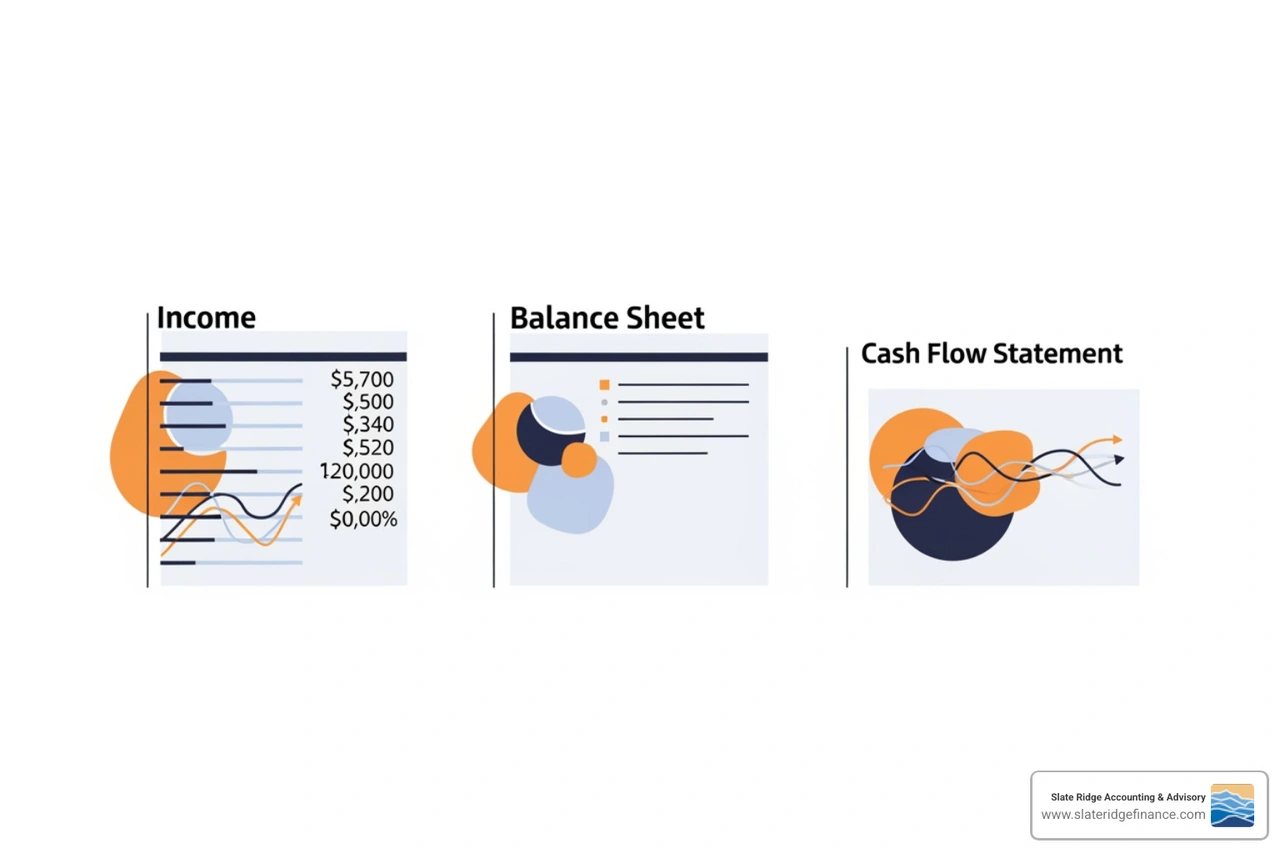
Our bookkeeping efforts culminate in essential financial statements that provide a snapshot and overview of our business's health. Think of these as our business's vital signs:
- Income Statement (also known as Profit & Loss or P&L Statement): This statement shows our revenue, expenses, and ultimately our net profit or loss over a specific period (e.g., a month, quarter, or year). It tells us if we're making money or losing it. The "bottom line" on an income statement is the net profit or loss, which is crucial for understanding our operational efficiency.
- Balance Sheet: This statement provides a snapshot of our business's financial position at a specific point in time. It lists our assets (what we own), liabilities (what we owe), and owner's equity (our stake in the company). The fundamental equation here is: Assets = Liabilities + Equity. A healthy balance sheet is essential for showing potential investors or lenders our company's current financial standing. For example, a balance sheet can reveal if a growing credit card balance might be masking an unpaid invoice.
- Cash Flow Statement: This statement tracks the actual movement of cash in and out of our business over a period. It categorizes cash flows into operating, investing, and financing activities. While an Income Statement shows profitability, the Cash Flow Statement reveals if we have enough liquid cash to pay our bills and invest in growth. It's the ultimate answer to the question, "Where did all the money go?"
These statements are invaluable tools. For more detailed guidance on preparing and understanding these critical documents, refer to Financial Statement Preparation and our Small Business Financial Reporting Complete Guide.
Turning Insights into Action and Growth
With accurate financial statements in hand, we're no longer just recording history; we're equipped to write our future. This is where bookkeeping for entrepreneurs truly empowers us.
- Financial Forecasting: By analyzing past performance from our statements, we can make informed predictions about future revenues, operating costs, resource needs, and profit levels. This is critical for responsible growth, helping us plan for everything from hiring new employees to taking on additional clients. We can even forecast cash flow up to 90 days ahead, allowing us to proactively manage potential shortages or plan for investments. For comprehensive strategies, our Financial Growth Strategies Complete Guide offers valuable insights.
- Budgeting: Our financial insights allow us to create realistic budgets, allocating resources effectively and identifying areas for cost reduction. This helps us ensure we're spending wisely and on track to achieve our financial goals.
- Identifying Profitability Paths: The Income Statement helps us understand where our profits come from and where they might be leaking. We can identify which products or services are most profitable, or if certain expenses are too high. A clear, sustainable path to profitability is not just good business sense; it's crucial for attracting investors.
- Securing Funding: Accurate and well-presented financial records are non-negotiable when seeking loans or investment. Businesses with professional accounting support are twice as likely to secure funding or capital investment. Lenders and investors want to see a clear picture of our financial health, stability, and growth potential.
- Strategic Decision-Making: Every major business decision, from launching a new product to expanding into a new market, should be informed by financial data. Proper bookkeeping allows us to track Key Performance Indicators (KPIs), giving us measurable insights into our business's success. This financial intelligence helps us make better, more strategic decisions.
Understanding our finances is not just about managing costs; it's about making our business more resilient and attractive for growth. To deepen our understanding of this vital connection, we recommend revisiting Why Entrepreneurs Need to Understand Accounting. For broader strategies on scaling our ventures, explore Business Growth Strategies and learn How to Track KPIs effectively.
Choosing Your Path: DIY, Software, or Professional Services
Now that we appreciate the immense value of bookkeeping for entrepreneurs, the next question is: how do we get it done? We have several paths, each with its own costs and benefits, and the best choice depends on our specific needs, budget, and comfort level.
The Costs and Benefits of Each Approach
Let's break down the options:
Do-It-Yourself (DIY) Bookkeeping:
- Costs: While seemingly "free" in terms of direct cash outlay, DIY bookkeeping carries significant hidden costs. As we saw earlier, spending 20 hours a month on financial tasks represents $3,000 monthly or $36,000 annually in opportunity cost for a business owner valued at $150/hour. Accounting errors can also lead to an average of $3,534 per year in tax overpayments. Moreover, 67% of entrepreneurs cite administrative burdens as a key factor preventing them from focusing on business growth.
- Benefits: Complete control over our books, no recurring fees for services, and a deeper understanding of our transactions (if done correctly).
- Best For: Very small, simple businesses or those just starting out with minimal transactions.
Using Accounting Software:
- Costs: Bookkeeping software ranges from free services with limited functionality to full-fledged accounting suites. Subscriptions can vary, but generally, we can find options that fit various budgets. For specific recommendations, our guide on Online Accounting Software Small Business can be helpful.
- Benefits: Saves time by automating many tasks (like transaction categorization and report generation), reduces errors compared to manual methods, provides organized records, and offers real-time financial insights. Many platforms also offer mobile apps for easy receipt capture.
- Best For: Most small to medium-sized businesses looking for efficiency, accuracy, and better financial visibility without the full cost of outsourcing.
Hiring a Professional Bookkeeper or Outsourcing Services:
- Costs: A professional bookkeeper may charge $30-$90 per hour for their services. For comprehensive outsourced bookkeeping services, costs can range between $200 and $2,500 per month, depending on the volume of transactions and complexity of our financials. For a detailed breakdown of costs, check out our Virtual Bookkeeper Cost guide.
- Benefits: This option frees up our valuable time to focus on core business activities, provides expert accuracy and compliance, reduces the risk of errors and fraud, and offers scalable financial infrastructure that grows with our business. Companies with outsourced accounting functions grow revenue 28% faster than those handling accounting in-house, and they are twice as likely to secure funding. This allows us to focus on what we do best—growing our business.
- Best For: Growing businesses, those with complex transactions, businesses needing strategic financial advice, or entrepreneurs who want to maximize their time on revenue-generating activities.
Each path has its merits, but the goal remains the same: accurate, timely, and insightful financial records.
Frequently Asked Questions about Bookkeeping for Entrepreneurs
We know you have questions, and we're here to provide clear answers to some of the most common inquiries regarding bookkeeping for entrepreneurs.
How often should I do my bookkeeping?
Consistency is key in bookkeeping, and the frequency can vary depending on the task:
- Daily: Ideally, we should record significant transactions as they happen. This helps keep records tidy and prevents a backlog. Capturing receipts with a mobile app immediately after a purchase is a great daily habit.
- Weekly: Dedicate a specific time each week (e.g., "Fiscal Friday"!) to review and categorize transactions. This ensures nothing slips through the cracks and keeps our books up-to-date.
- Monthly: This is a crucial cycle. We should perform bank reconciliations, review our Income Statement and Balance Sheet, and analyze key metrics. This monthly check-up helps us spot trends, forecast cash flow, and ensure accuracy.
- Quarterly: For many businesses, quarterly tasks include reporting sales tax, recording depreciation, and reviewing home office expenses if applicable.
- Annually: The end of the year involves a final review to catch up on any outstanding records, update loans, tie up loose ends, and prepare everything carefully for tax filing.
Is accounting software difficult to learn?
Not at all! While the thought of new software can seem daunting, most modern accounting software is designed with user-friendliness in mind, especially for entrepreneurs who aren't finance experts. Many platforms offer intuitive dashboards and step-by-step guides.
The primary benefit of accounting software is automation. It can connect directly to our bank accounts and credit cards, importing transactions automatically and even suggesting categories. This significantly reduces manual data entry and potential errors. Many services also offer guided setup sessions to help us configure our chart of accounts and connect our financial accounts correctly from the start. While there's always a small learning curve with any new tool, the long-term benefits of efficiency, accuracy, and access to insights far outweigh the initial effort.
When is the right time to hire a bookkeeper?
This is a question many growing entrepreneurs grapple with. The "right time" often comes when the costs of DIY bookkeeping (in terms of our time, stress, and potential errors) start to outweigh the cost of professional help. Here are some clear indicators:
- Time Constraints: If financial tasks are preventing us from focusing on core business development, serving customers, or generating revenue, it's time to delegate. Small business owners spend more than 20 hours per month on financial tasks – that's 25% of a standard work week!
- Business Growth: As our business grows, transactions become more complex, and our time becomes more valuable. As soon as we see significant growth in our company, a detailed, consistent bookkeeping approach becomes essential.
- Lack of Financial Knowledge or Confidence: If we feel financially illiterate, or simply overwhelmed and unsure about the accuracy of our reporting, a bookkeeper can provide peace of mind and expertise.
- Need for Strategic Advice: A good bookkeeper doesn't just record numbers; they help us understand them. If we need deeper financial insights to make informed decisions, optimize for tax deductions, or plan for future growth, a professional is invaluable.
- Tax Season Stress: If tax time is a nightmare of scrambling for receipts and worrying about compliance, a bookkeeper can ensure we're organized year-round and ready for any filing requirements.
If we're in North Carolina, seeking a dedicated professional for our business, we can explore options such as a Bookkeeper Near Me to find local support that understands our specific needs.
Conclusion: Take Control of Your Financial Future
Bookkeeping for entrepreneurs isn't a chore to be avoided; it's a powerful tool that, when wielded effectively, can transform our business. From understanding the fundamental differences between bookkeeping and accounting to implementing smart systems and avoiding common pitfalls, we've explored how financial clarity can become our greatest strategic asset.
By embracing proper bookkeeping, we empower ourselves to:
- Make informed decisions based on accurate data.
- Identify paths to profitability and sustainable growth.
- Secure funding and attract investors with confidence.
- Reduce stress during tax season and ensure compliance.
- Free up our precious time to focus on what we love to do: innovate, create, and grow our business.
At Slate Ridge Accounting & Advisory, we understand the unique challenges faced by entrepreneurs in Asheville, Boone, Charlotte, Greensboro, Greenville, Hickory, Morganton, and Raleigh, NC. Our mission is to provide modern, personalized, and industry-custom financial solutions that help businesses like yours track KPIs and forecast growth. We believe that with the right support, every entrepreneur can master their money and, in turn, master their business.
Ready to gain unparalleled financial clarity and open up your business's full potential? Take the next step with Virtual Accounting today.
Ready to get started?
Book a free consultation today and let’s explore how Slate Ridge can support your business with expert accounting that’s accurate, timely, and built around your goals.
You Might Also Like
A few more posts we think you’ll enjoy on topics that matter to business owners like you.