
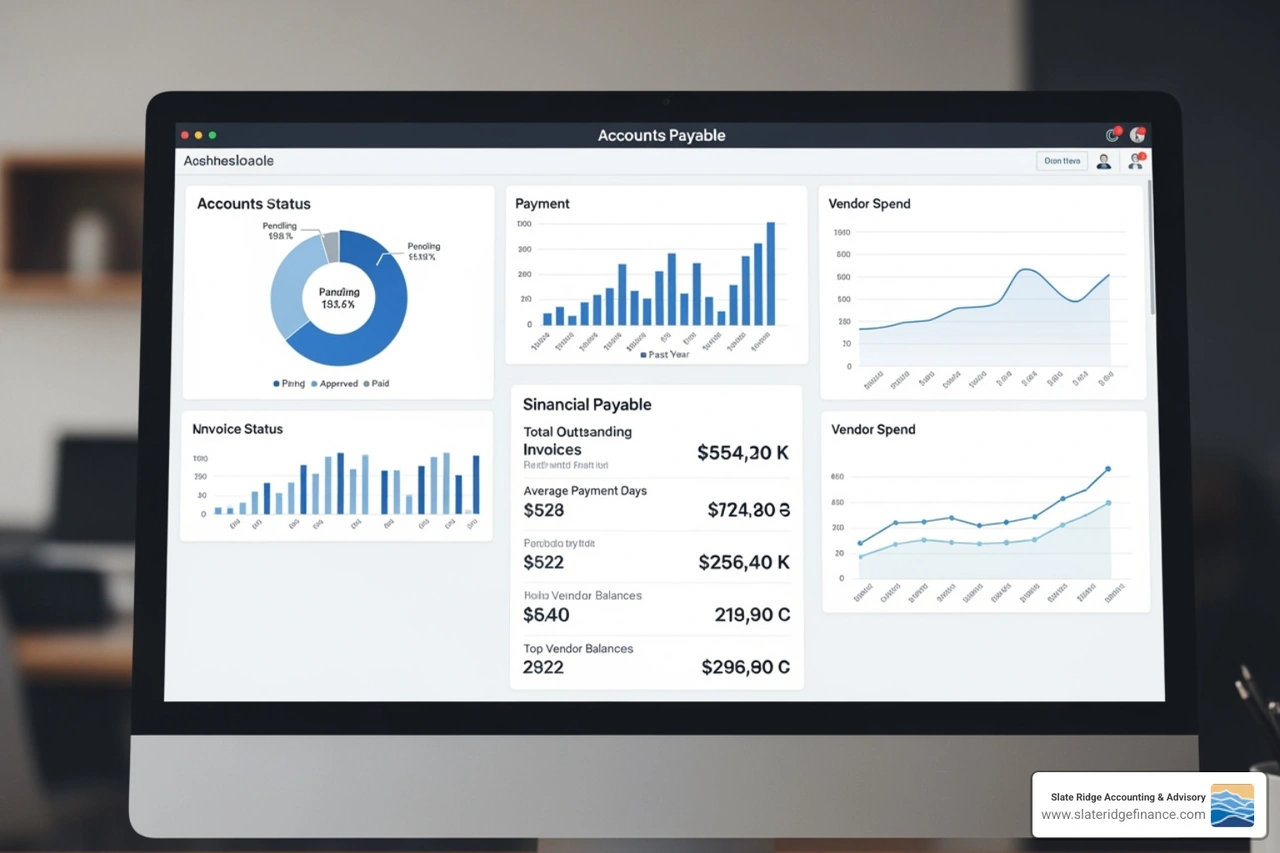
Why Accounts Payable Outsourcing Matters for Growing Businesses
Accounts payable outsourcing means hiring a third-party provider to manage your company's bill payment process—from receiving invoices to processing payments and maintaining records. Here's what you need to know:
Quick Answer:
- What it is: A specialized firm handles your invoice processing, vendor payments, and AP compliance
- Typical cost: $1.40-$2.00 per invoice, or flat monthly fees
- Main benefits: 50-70% cost reduction, faster processing (3-5 days vs. 10-15 days), reduced errors
- Best for: Businesses overwhelmed by invoice volume, lacking AP expertise, or wanting to focus on growth
- Key consideration: You trade direct control for efficiency and cost savings
Are you spending more time processing invoices than growing your business? Many small to medium-sized businesses pay $22 to process a single paper invoice manually. This high cost steals time from strategic work that moves your business forward.
The accounts payable function has evolved from a simple task to a strategic opportunity. By leveraging technology and expertise, companies can drop invoice processing costs from $13 to just $3 per invoice and cut processing time from 17 days to 3.
Outsourcing is about more than cost—it's about freedom from administrative burdens, hiring specialized staff, and focusing on what you do best. The decision to outsource AP affects cash flow, vendor relationships, and your ability to scale. This guide will help you evaluate if AP outsourcing is right for you. Learn more about strategic accounting and payroll services for small businesses.

What is accounts payable outsourcing?
Accounts payable outsourcing is the practice of entrusting your AP processes to a specialized third-party company. It's like bringing in a team of experts to handle your bills accurately and on time, without you managing the day-to-day operations.
Outsourced AP providers typically manage:
- Invoice receipt and processing: Receiving and capturing data from invoices, matching them with purchase orders, and handling exceptions with smart-scanning technology.
- Vendor management: Ensuring timely payments, handling inquiries, and resolving disputes to maintain healthy supplier relationships.
- Payment processing: Executing payments via ACH, wire, check, or virtual cards, often optimizing for early payment discounts.
- Compliance and reporting: Maintaining detailed, audit-ready records and ensuring transactions adhere to financial regulations.
As a form of Business Process Outsourcing (BPO), the goal is to optimize tasks, not just offload them. Providers use advanced tools like AI-driven automation to streamline your AP workflow, enhancing efficiency and accuracy. For more on the AP function, see A complete guide to accounts payable.
Why businesses are looking beyond in-house AP
Many businesses move beyond traditional in-house AP for compelling reasons:
- Overwhelmed teams: As a business grows, invoice volume can quickly overwhelm internal staff, leading to backlogs.
- High error rates: Manual processing is prone to human error, resulting in duplicate payments, missed discounts, and damaged vendor relationships.
- Lack of visibility: Without robust systems, it's difficult to get a real-time view of financial obligations, hindering cash flow management.
- Cost of manual processing: As highlighted by a Goldman Sachs report, companies paying an average of $22 to process a single paper invoice are driven to find more efficient solutions.
- Desire to focus on core business activities: AP tasks divert valuable resources from strategic initiatives. Outsourcing frees up your team to focus on growth.
These challenges lead many financial leaders to consider accounts payable outsourcing services.
The Pros and Cons of Accounts Payable Outsourcing
Deciding to outsource a critical function like accounts payable is a significant strategic move. It's not a one-size-fits-all solution, and understanding both the benefits and potential pitfalls is crucial for making an informed decision.
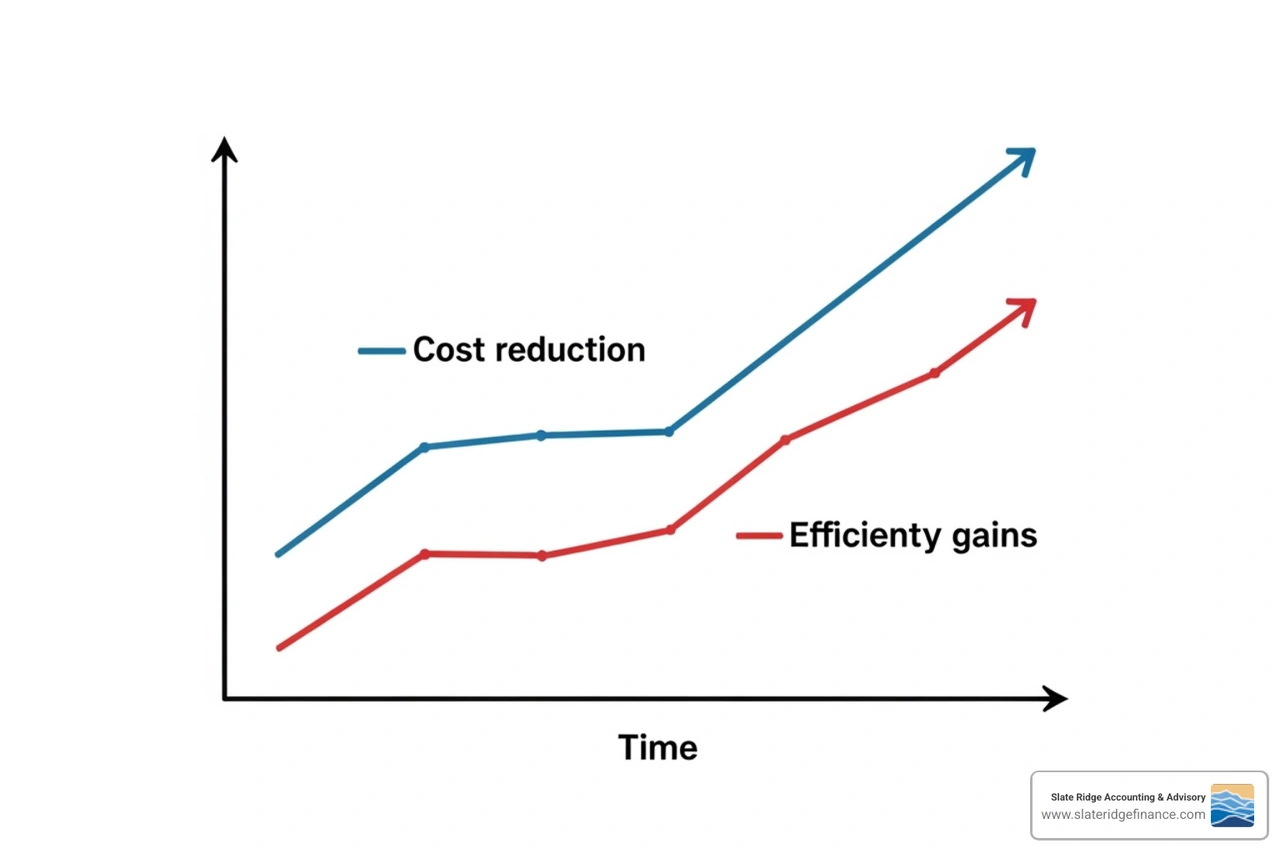
Accounts payable outsourcing promises to transform a labor-intensive process into a streamlined operation. But like any major business decision, it comes with trade-offs. Let's look at both sides so you can make the right choice.
Key Advantages of Outsourcing Your AP
Outsourcing AP can fundamentally change your financial operations, turning a necessary burden into a strategic asset. Here’s what makes it so attractive:
Reduced overhead and lower processing costs. Stop worrying about hiring, training, and retaining AP staff. Outsourcing transforms variable labor costs into predictable, fixed expenses. Businesses report saving up to 70% compared to in-house departments, with top performers dropping invoice processing costs from $13 to just $3.
Access to advanced technology. Gain the benefits of cutting-edge AP automation, AI-powered data extraction, and cloud-based platforms without the hefty upfront investment. These technologies can reduce invoice processing time by 50-90%.
Improved accuracy and efficiency. Manual data entry has a 1-3% error rate. Automated systems bring this close to zero, while processing times can plummet from 17 days to just 3. Your team is freed from paperwork to focus on strategic financial analysis.
Improved fraud prevention and compliance. Reputable providers maintain SOC 2 and ISO 27001 compliance and use AI-infused automation to spot red flags like duplicate payments or unauthorized transactions, helping you avoid costly violations.
Better vendor relationships. Consistently timely and accurate payments build goodwill. You can capture early payment discounts, avoid late fees, and build a reputation that leads to more favorable terms.
Scalability and flexibility. An outsourced team scales with your invoice volume, whether due to growth or seasonal fluctuations. No more hiring sprees or awkward layoffs—just smooth, predictable operations.
Improved visibility and control. Modern outsourced solutions provide real-time dashboards and detailed reports, offering a clearer picture of cash flow and spending trends than most manual systems. We're all about optimizing your financial processes for these strategic advantages.
Potential Risks and How to Mitigate Them
Outsourcing isn't without challenges. The good news? Each risk has a practical mitigation strategy.
Loss of direct control. Handing over a core financial function can feel uncomfortable. Mitigation: Establish clear Service Level Agreements (SLAs) with specific performance metrics, regular reporting, and defined communication channels. You're delegating with clear oversight, not abdicating control.
Data security risks. You're entrusting sensitive financial data to a third party. Mitigation: Vet providers thoroughly. Look for SOC 2 and ISO 27001 certifications and ask detailed questions about their encryption, access controls, and audit trails. A reputable provider will have comprehensive answers.
Communication challenges. Misunderstandings can lead to delays, especially with providers in different time zones. Mitigation: Choose providers with dedicated account managers and a proven track record of clear communication. Establish regular check-ins to keep everyone aligned.
Dependency on provider. Your provider becomes critical to daily operations. If they fail, you could face significant disruption. Mitigation: Select a reputable, financially stable provider. Ensure your contract includes a clear exit strategy and data portability so you can retrieve your information if needed.
Teething issues during transition. The initial move requires careful planning, and there will be a learning curve. Mitigation: Choose a provider with a proven implementation process and strong onboarding support. Dedicate internal resources to assist with the transition and maintain open communication.
AP Outsourcing vs. AP Automation: Making the Right Choice
When improving accounts payable, businesses typically encounter two paths: accounts payable outsourcing and AP automation. The difference matters more than you might think.

Think of it this way: outsourcing is hiring someone to do your laundry, while automation is buying a great washing machine. With outsourcing, a third-party service handles the entire AP function. With automation, you equip your existing team with software to make them faster and more accurate. Both deliver efficiency, but they serve different needs.
This choice is a strategic one that affects your finance function's daily operations, from in-house control versus third-party service to software implementation versus human expertise.
Understanding the Core Differences
Let's look at what separates accounts payable outsourcing from AP automation:
| Feature | Accounts Payable Outsourcing | Accounts Payable Automation |
|---|---|---|
| Who does the work? | A third-party service provider and their team of experts. | Your internal finance team, utilizing specialized software. |
| Cost structure | Typically per-invoice, per-transaction, or flat monthly fees. Can vary with volume. | Flat monthly or annual software subscription fees, regardless of volume. |
| Level of control | Less direct control over daily operations; rely on provider's processes and reports. | Full control over processes, data, and software configuration. |
| Implementation | Focus on integrating your systems with the provider's; less internal training on new software. | Requires upfront software setup, integration with ERP, and internal staff training. |
| Human expertise | Access to provider's specialized AP staff and industry knowledge. | Relies on existing internal staff expertise, improved by software capabilities. |
| Scalability | Provider scales resources up/down with your volume, often seamlessly. | Software handles increased volume; may require additional internal staff for exceptions. |
| Best for which business type | Businesses seeking to offload AP entirely, lacking internal staff/expertise, or rapid growth. | Businesses wanting to retain full control, with internal AP staff, or sensitive data concerns. |
Most reputable outsourcing providers use automation themselves. So the real question isn't "automation or not?" It's "who manages the automation?" You're choosing between managing technology yourself or letting someone else handle it for you.
When is accounts payable outsourcing the better option?
Outsourcing makes the most sense in several clear scenarios:
- Limited internal staff: Hiring an AP clerk costs around $45,366 annually plus benefits. Outsourcing fills the gap without the commitment of hiring.
- Need for specialized expertise: Gain access to best-in-class AP processes, international payment knowledge, or industry-specific compliance without building it in-house.
- Desire to avoid technology management: Get the benefits of sophisticated automation without the headaches of software licenses, updates, and integration.
- Rapid growth mode: An outsourced provider can scale up immediately when your invoice volume doubles, with no need to scramble to hire and train new staff.
- Predictable, fixed costs: A good outsourcing contract provides consistent monthly expenses, making budgeting straightforward.
If you want the headache off your plate and are comfortable with shared control for efficiency, outsourcing is likely your answer.
When to Choose In-House AP Automation
In-house automation has its own compelling advantages and is often the better path for some businesses.
- Need for full control: If you want to manage every step of the AP process and see everything in real-time, automation keeps it all under your roof.
- Sensitive data concerns: Some businesses prefer to keep all financial data within their organization for security or compliance reasons.
- Existing skilled finance team: Automation empowers your current team, eliminating tedious tasks so they can focus on analysis and strategy.
- Long-term cost perspective: For high-volume businesses, the flat subscription fees of software can be more cost-effective over time than per-invoice outsourcing fees.
- Custom workflow requirements: In-house solutions offer greater flexibility to tailor the process and integrations to your exact needs.
This approach lets you leverage technology while maintaining complete oversight. To learn more, check out our guide on modern accounting practices.
How to Select the Right AP Partner
Finding the right accounts payable outsourcing partner is a critical decision. This partner will handle your financial data, interact with your vendors, and directly impact your cash flow. It's a relationship that requires trust, transparency, and alignment with your business goals.
You're not just looking for an invoice processor; you're looking for a strategic partner who can improve how your business operates. Here's how to find them.
Key factors in choosing an accounts payable outsourcing partner
When evaluating potential partners, look at it as a partnership, not just a transaction. Here's what matters:
- Experience and reputation: How long has the provider been in business? Do they have experience with companies of a similar size and in your industry? Look for case studies and testimonials that show real results.
- Technology and integration capabilities: The provider's systems must integrate seamlessly with your ERP or accounting software (e.g., QuickBooks, SAP, NetSuite). Clunky integration creates more work, defeating the purpose of outsourcing.
- Customization and flexibility: Your business isn't cookie-cutter. A great provider can adapt to your specific approval workflows and reporting requirements, rather than forcing you into their rigid process.
- Transparent pricing models: Understand exactly how you'll be charged—per invoice, flat fee, or tiered structure. Ask about extra costs for services like rush processing, setup, or custom reports. Hidden fees are a red flag.
- Service-level agreements (SLAs): Your SLA is a contract for performance. It should clearly define processing times, accuracy rates, and support response times to hold your provider accountable.
- Customer support: Will you have a dedicated account manager? How quickly do they respond to issues? Good technology is useless without responsive support. For more on building strong financial partnerships, see our approach to accounting and payroll services.
Verifying Security and Compliance
Handing over sensitive financial data should be taken seriously. Accounts payable outsourcing means trusting another organization with your vendor details, banking information, and payment schedules. Proper vetting is non-negotiable.
- Data protection: Ask direct questions about data security. How is data encrypted? Where is it stored? Who has access? A serious provider will have detailed answers.
- Industry certifications: Look for independent verification of security standards. SOC 2 compliance and ISO 27001 certification are key indicators of a robust security posture.
- Security frameworks: Reputable providers follow established standards like the NIST framework for managing cybersecurity risks. Ask which frameworks they use.
- Regulatory compliance: Ensure the provider complies with regulations relevant to your business, such as GDPR (for EU data), HIPAA (for healthcare), or SOX (for public companies).
- Fraud detection protocols: How does the provider prevent duplicate payments or payments to fraudulent vendors? They should have robust, AI-driven systems and approval workflows to catch anomalies and prevent financial loss.
At Slate Ridge Accounting & Advisory, we handle sensitive financial data daily and apply this same level of scrutiny to our own security practices.
Frequently Asked Questions about AP Outsourcing
Deciding if accounts payable outsourcing is right for your business brings up many questions. You're making a strategic decision about how your business handles money. Here are the answers to the questions we hear most often.
How much does it cost to outsource accounts payable?
There's no single price tag, as costs depend on invoice volume and complexity. However, you can expect a general range.
Most providers use a per-invoice pricing model, typically charging between $1.40 and $2.00 per invoice. This is straightforward, but costs scale directly with volume. Others offer flat monthly rates or tiered pricing structures, which provide more budget certainty.
Be sure to ask about potential hidden costs for services like rush processing, system integration, or custom reporting. To put this in perspective, an in-house AP clerk costs around $45,366 annually before benefits and taxes. Outsourcing often provides access to a full team and enterprise-level technology for a fraction of that cost.
How long does it take to implement AP outsourcing?
Implementation requires some time and effort, but most providers have a streamlined onboarding process. A typical implementation takes 4-8 weeks for a standard setup. Businesses with complex integrations or highly customized workflows should plan for 2-4 months.
The process generally involves:
- Onboarding: The provider learns your current workflows and configures their systems to match your needs.
- Data migration: Your vendor information and historical data are moved to the new system. The cleaner your data, the faster this goes.
- Team training: Your team learns how to use the new portals or dashboards and communicate with the provider.
A reputable provider will manage this entire process to ensure a smooth transition for your business.
Can small businesses benefit from AP outsourcing?
Absolutely. In fact, small businesses often benefit the most from accounts payable outsourcing.
- Scalability: Outsourcing easily handles fluctuating invoice volumes from seasonal spikes or rapid growth, eliminating the need to hire or lay off staff.
- Cost-effectiveness: It's significantly cheaper than hiring a full-time AP employee (approx. $45,366/year salary), freeing up capital for growth initiatives.
- Access to enterprise-level tools: Small businesses gain access to advanced automation, AI-powered fraud detection, and real-time dashboards they couldn't otherwise afford.
- Freeing up owner's time: When you're not bogged down in administrative tasks, you can focus on strategy, customer relationships, and revenue-generating activities.
Outsourcing AP helps small businesses improve cash flow and efficiency. For more guidance, see our tips for managing small business accounts receivable and payable.
Conclusion: Is Outsourcing AP Your Path to Financial Clarity?
The decision to use accounts payable outsourcing is about aligning your financial operations with your business goals. We've seen how it can transform a time-consuming function into a strategic asset that works for you.
By outsourcing AP, you're not just cutting costs; you're reclaiming time and mental energy to focus on what you love about your business—serving customers, developing products, or executing your growth strategy. Your finance team can shift from administrative tasks to high-value work like analyzing trends and improving cash flow.

At Slate Ridge Accounting & Advisory, we help small businesses find these practical solutions. As a cloud-based accounting firm, we offer virtual bookkeeping and advisory services personalized to your industry. We help you track the KPIs that matter, forecast growth, and achieve financial freedom.
If you're drowning in invoices, worried about manual errors, or feel your team could be doing more strategic work, accounts payable outsourcing might be the answer. It's about working smarter, so you can focus on building the business you've always imagined.
Ready to explore what this could look like for your business? Take control of your finances with our virtual accounting services and let's discuss your goals.
Ready to get started?
Book a free consultation today and let’s explore how Slate Ridge can support your business with expert accounting that’s accurate, timely, and built around your goals.
You Might Also Like
A few more posts we think you’ll enjoy on topics that matter to business owners like you.