Why an Automated Payroll System Is a Game-Changer for Small Business
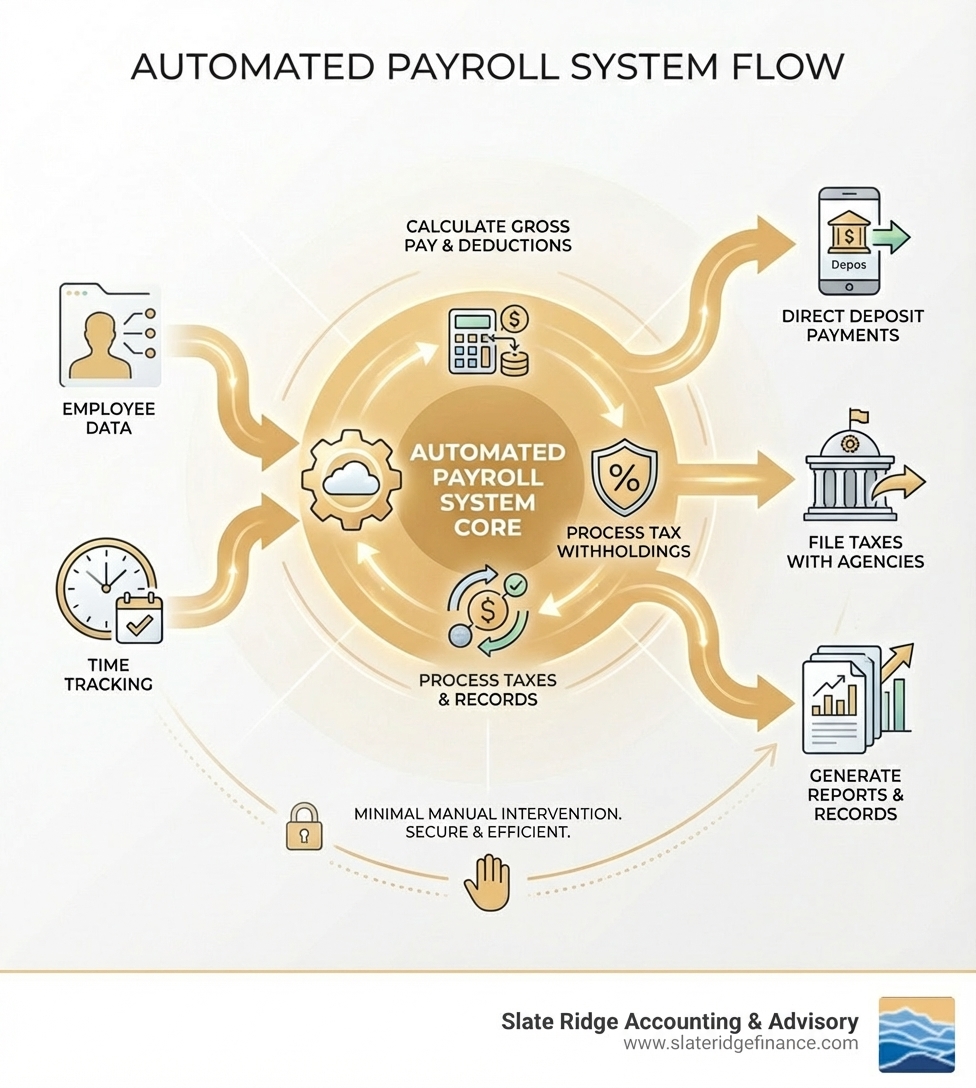
An automated payroll system is software that handles your payroll tasks with minimal human intervention. It calculates wages, withholds taxes, processes deductions, issues payments, and maintains records—all automatically.
Quick Answer: What Does Payroll Automation Do?
- Eliminates manual data entry - No more spreadsheets or calculator work
- Calculates taxes automatically - Federal, state, and local withholdings done right
- Processes payments - Direct deposits happen on schedule
- Maintains compliance - Keeps you up to date with changing regulations
- Generates reports - Tax forms and analytics at your fingertips
- Reduces errors - Removes human mistakes from the equation
Payroll is a fundamental, non-negotiable part of business. Yet, manual processing is notoriously complex and risky. In fact, 99% of organizations make an average of 300+ off-cycle payments due to errors each year. A single spreadsheet mistake can cause hours of rework, while physical records pose security risks. Staying compliant with ever-changing tax laws is a job in itself.
Payroll automation transforms this headache into a streamlined process, freeing up three to five hours per week. It lifts payroll from a tedious chore to a strategic function that fuels your business growth.
Find more about automated payroll system:
Manual vs. Automated Payroll: A Clear Comparison
Let's face it, manual payroll can feel like trying to herd cats while juggling flaming torches – chaotic, risky, and prone to singed eyebrows. Before we dive into the wonders of automation, let's take a quick look at how the old way stacks up against the new.
| Feature | Manual Payroll | Automated Payroll System |
|---|---|---|
| Time | Highly time-consuming, repetitive data entry. | Significantly reduces time spent, automates routine tasks. |
| Accuracy | Prone to human error (typos, miscalculations). | High accuracy due to automated calculations and checks. |
| Cost | Hidden costs in time spent, potential fines for errors. | Software subscription, but saves money on errors and time. |
| Compliance | Requires constant manual tracking of changing laws. | Automatically updates to reflect current tax laws and regulations. |
| Scalability | Becomes exponentially harder with more employees. | Easily scales with business growth without added complexity. |
| Security | Physical documents, unsecured spreadsheets. | Encrypted data, secure access, audit trails. |
Manual payroll is filled with risks. A simple typo can lead to incorrect deductions, late tax filings, significant penalties, and unhappy employees. Research shows that 99% of organizations make an average of 300+ off-cycle payments due to errors each year.
Disconnected systems for time tracking, HR, and accounting only worsen the problem, creating more manual work and opportunities for mistakes. Furthermore, manual systems often rely on unsecured spreadsheets or physical files, putting sensitive employee data at risk.
Switching to an automated payroll system is more than a software change; it's a strategic upgrade. It shifts your business from reactive problem-solving to proactive, efficient management, freeing you to focus on growth across North Carolina.
For more insights into managing your financial processes, explore our article on Accounting and Payroll Services for Small Business.
The Core Benefits of an Automated Payroll System

Implementing an automated payroll system is like hiring a super-efficient, error-proof assistant who works 24/7. For small businesses across North Carolina, from the mountains of Boone to the coast of Wilmington, these benefits are game-changers.
1. Time and Cost Savings: Manual payroll consumes hours each pay period. An automated system can free up three to five extra hours of work per week. These systems also reduce costly errors and the associated penalties, directly impacting your bottom line.
2. Improved Accuracy and Compliance: Human error is inevitable in manual payroll. An automated payroll system performs calculations with precision, drastically reducing overpayments, underpayments, and incorrect tax filings. The software stays updated with the latest federal, North Carolina state, and local tax laws, automatically calculating and filing taxes for you. This ensures correct withholdings for income tax, FICA, insurance, and retirement contributions, and it provides a clear audit trail for compliance. Land O’Lakes, for instance, improved payroll accuracy to over 99.9% and cut off-cycle payments by 50% through automation.
3. Robust Data Security: Employee payroll data is highly confidential. Automated systems, especially cloud-based ones, employ advanced encryption and security protocols to protect sensitive information, safeguarding your employees' privacy and your business's reputation.
4. Scalability for Growth: As your business grows, so does your payroll complexity. An automated payroll system is built to scale, easily accommodating new hires and evolving payroll structures without requiring a complete overhaul of your processes.
5. Strategic Focus for Managers: When payroll tasks are automated, your HR and finance teams are liberated from tedious administrative duties. This allows them to focus on more strategic initiatives, such as talent management and financial forecasting. As 92% of business leaders recognize payroll’s strategic importance, automation helps bridge the gap between intent and execution.
6. Employee Empowerment with Self-Service: Modern systems empower employees with self-service portals. They can securely access payslips, view tax forms (like W-2s), and update personal information 24/7. This transparency improves the employee experience and significantly reduces the administrative burden on your staff. The American Payroll Association reports 83% of employers offer self-service, making it a standard expectation.
These benefits underscore why an automated payroll system is a strategic investment in your business's efficiency, compliance, and future growth. For comprehensive support in managing your payroll, explore our Payroll Management Services.
Key Features and How Automation Works
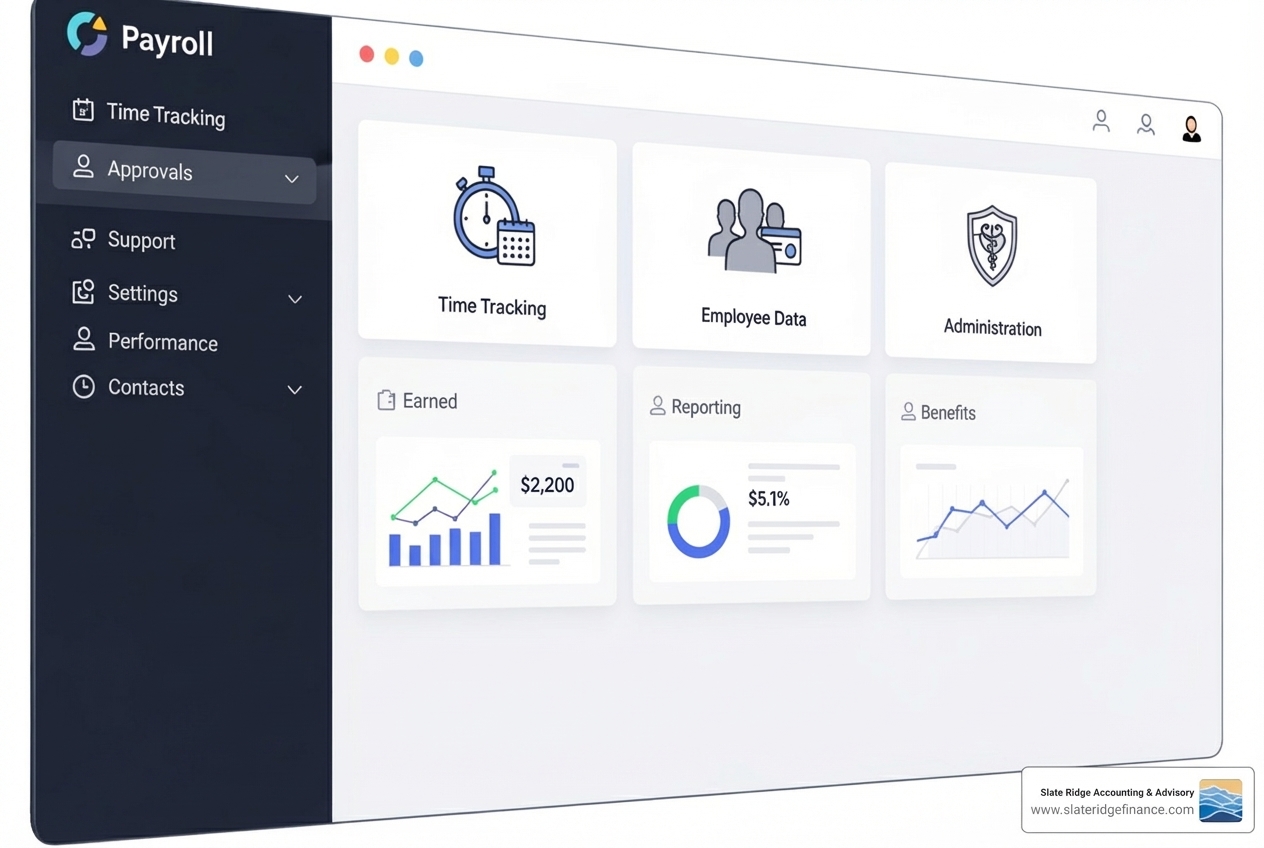
At its heart, an automated payroll system works by creating a seamless flow of data. Information from time-tracking, HR, and benefits systems feeds directly into a central payroll engine, eliminating error-prone manual entry. The best systems operate on a single, unified database for maximum consistency. Key functionalities include smooth integrations with accounting software (like QuickBooks or Xero), secure direct deposit that gets employees paid on time, and powerful reporting tools for valuable financial insights.
To explore how these features can benefit your small business, check out our insights on Small Business Online Payroll Services.
Core Features of a Good Automated Payroll System
When we talk about a "good" automated payroll system, we're looking for a suite of features that not only simplifies the process but also adds strategic value to your business. Here are the must-haves:
- Wage and Overtime Calculation: Accurately calculates gross pay for all employee types, applying correct overtime rates based on federal and North Carolina state laws and handling various pay frequencies.
- Tax Withholding and Filing: Automatically calculates and withholds federal, state, and local taxes. Crucially, it should also handle the timely filing and remittance of these taxes to the proper authorities.
- Benefits and Deductions Processing: Accurately manages all pre-tax and post-tax deductions, including health insurance, 401(k) contributions, and garnishments.
- Direct Deposit and Payment Distribution: Allows for direct electronic transfer of wages into employee bank accounts, which is the modern standard for speed and security.
- Time-Tracking Integration: Seamlessly pulls in employee hours, sick leave, and vacation time from integrated time and attendance systems, eliminating manual entry.
- End-of-Year Tax Forms (W-2s, 1099s): Automatically generates and distributes all necessary year-end tax documents for your employees and contractors.
- Custom Reporting and Analytics: Offers flexible tools to generate custom reports on payroll costs, tax liabilities, and other key metrics for deeper financial insight.
Handling Complex Scenarios with an Automated Payroll System
A robust automated payroll system also handles more complex situations, ensuring compliance as you grow.
- Multi-State Payroll: If you hire employees in neighboring states like South Carolina or Virginia, the system automatically applies the correct state and local tax rules, managing the different withholding and filing requirements.
- Built-in Compliance: The software stays updated on federal (FLSA) and North Carolina labor laws, acting as a built-in compliance expert so you can be confident your payroll is always accurate and above board.
For startups, understanding how an automated payroll system can manage these complexities from day one is crucial for sustainable growth. Learn more through our Payroll Services for Startups.
How to Implement Payroll Automation in Your Business
So, you're ready to ditch the spreadsheets and accept the efficiency of an automated payroll system? Fantastic! The implementation process might seem daunting, but with a structured approach, it can be surprisingly smooth.
1. Assess Your Current Processes: Document your current workflow, identifying bottlenecks, manual tasks, and common errors to understand your specific needs.
2. Set Your Priorities: Define your goals for automation—such as saving time, reducing errors, or improving compliance—to guide your software selection.
3. Select the Right Software: Choose a system that fits your North Carolina business's size and industry, considering features, integrations, scalability, and support.
4. Data Migration: Transfer employee information, payroll history, and tax data into the new system. Most providers offer guided support for this critical step.
5. Phased Rollout (Recommended): Run the new system in parallel with your old one for a pay cycle or two. This allows you to verify accuracy and build confidence before a full switch.
6. Employee Training and Adoption: Provide training for your staff and introduce self-service features to your team to ensure everyone can use the new system effectively.
By following these steps, your North Carolina business can smoothly transition to an automated payroll system. For guidance on choosing the right solutions for your business, check out our insights on Business Payroll Companies.
Understanding Costs, Risks, and System Requirements
Implementing an automated payroll system is an investment. Understanding the associated costs, risks, and requirements upfront helps you make an informed decision.
Costs Associated with Payroll Automation Software:Costs typically include a base monthly fee plus a per-employee charge. Look out for additional fees for setup, tax filing, or premium features. Weigh these costs against the long-term savings from increased efficiency and avoided penalties.
Potential Risks of Payroll Automation:Risks include data integration errors, cybersecurity threats, and low employee adoption. Mitigate these by choosing a reputable provider with strong security, performing thorough testing during a phased rollout, and providing comprehensive employee training.
System Requirements for Effective Payroll Automation:Most cloud-based systems require a stable internet connection. Crucially, automation still needs human oversight to manage exceptions, review final reports, and ensure the system is used strategically. Your payroll manager's role shifts from data entry to strategic management.
Understanding these aspects will empower your North Carolina business to choose and implement an automated payroll system that truly serves your needs. For a deeper dive into financial considerations, our Small Business Payroll Cost Guide can provide further insights.
Frequently Asked Questions about Automated Payroll
We often hear similar questions from North Carolina business owners considering the leap to an automated payroll system. Let's tackle some of the most common ones.
How does automation impact the role of a payroll manager?
Automation lifts the payroll manager's role. Instead of tedious data entry, they focus on strategic analysis, using payroll data to forecast labor costs and provide insights to leadership. Their time shifts to handling complex exceptions, advising on compliance, and ensuring the payroll function supports broader business goals.
Can I switch to an automated system mid-year?
Yes, you can switch at any time. Reputable providers are experienced with mid-year transitions. You'll need to provide your year-to-date payroll history (earnings, taxes, deductions), and your new provider will guide you through migrating the data to ensure a seamless and accurate first payroll run.
How do providers ensure data security and privacy?
Top providers use multiple layers of security to protect sensitive employee data. This includes strong data encryption (both in transit and at rest), multi-factor authentication (MFA) to control access, and regular third-party security audits. They operate from secure data centers and adhere to strict data protection regulations, with robust backup and disaster recovery plans to keep your information safe and accessible.
For businesses in North Carolina and beyond, entrusting your payroll data to a secure cloud-based system means peace of mind. To learn more about secure financial management, visit our Cloud Accounting Services page.
Conclusion: Future-Proof Your Business with Smart Payroll
We've journeyed through the automated payroll system, uncovering its definition, how it works, and the myriad benefits it offers. From dramatically reducing errors and saving precious time to bolstering compliance and empowering your employees with self-service, automation is truly a game-changer for businesses across North Carolina.
Payroll isn't just an administrative chore; it's a strategic function that underpins your entire operation. By transitioning from manual, error-prone processes to a streamlined, automated system, you're not just making life easier for your team – you're future-proofing your business. You're freeing up valuable resources to focus on growth, innovation, and what you do best.
At Slate Ridge Accounting & Advisory, we understand the unique challenges faced by small businesses in Asheville, Charlotte, Raleigh, and throughout North Carolina. We believe in providing modern, personalized, and industry-custom financial solutions that help you track key performance indicators and forecast growth. An automated payroll system is a cornerstone of that philosophy.
Ready to leave the payroll headaches behind and step into a world of cloud-nine efficiency?
Ready to get started?
Book a free consultation today and let’s explore how Slate Ridge can support your business with expert accounting that’s accurate, timely, and built around your goals.
You Might Also Like
A few more posts we think you’ll enjoy on topics that matter to business owners like you.